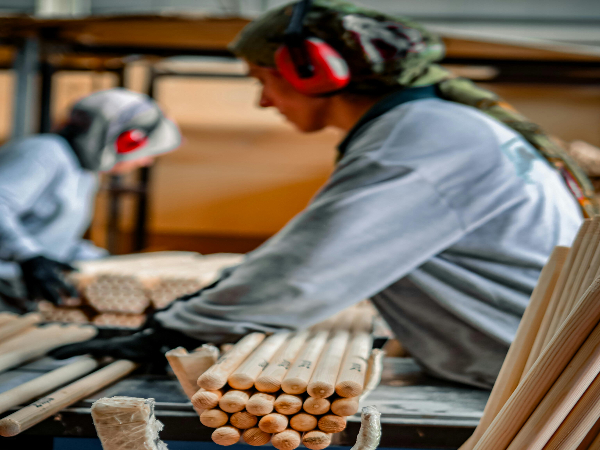
Sport still feels familiar on the surface. Training sessions look the same, matches are still decided by small margins, and performance still comes down to execution. But the equipment behind all of it has quietly gone through a serious shift.
Take something as ordinary as a running shoe or a cricket bat. A decade ago, the focus was mostly on design and materials. Now, the process behind making that product carries just as much weight. Every cut, every measurement, every finish is controlled more tightly than before because small inconsistencies are no longer acceptable.
The Shift Toward Precision Engineering
There used to be more tolerance for variation. A slight difference in weight or balance wasn’t ideal, but it was manageable. That’s changed. Equipment today is expected to behave the same way every single time it’s used. That expectation has pushed manufacturers toward more precise methods. CNC machining and multi-axis milling aren’t trends; they’ve become necessary. They allow parts to be manufactured with very little variation, which is exactly what modern performance demands.
In sports like cycling or golf, even a minor imbalance can affect how force moves through the equipment. It’s not always obvious immediately, but over time, those small differences add up. That’s why the process itself is now treated as part of the product, not something separate from it.
Advanced Materials Are Redefining Performance
The materials being used have also changed. Carbon fibre, titanium alloys, and layered composites are now common because they deliver strength without adding weight. That combination has obvious advantages in sport.
But working with these materials isn’t easy or simple. They respond differently during cutting and shaping, and they don’t tolerate mistakes well. A small error can create internal weaknesses that aren’t visible right away but show up later during use.
Work coming out of MIT has highlighted how material science is influencing performance-focused industries. In sport, that influence is already visible, not just in how equipment performs, but in how carefully it has to be manufactured.
Automation and Smart Manufacturing
Manufacturing has also become more controlled. Automation isn’t just about doing things faster anymore. It’s about doing them more consistently. Production lines now use sensors and real-time monitoring to track what’s happening as it happens. Instead of checking quality at the end, manufacturers are watching it throughout the process. That reduces variation and helps avoid errors early.
The Speedfactory initiative by Adidas, widely covered by Forbes, showed how production could be both fast and precise at the same time. It also hinted at something else, such as that manufacturing doesn’t have to be distant anymore. It can move closer to demand without losing control.
The Role of Tooling in Product Integrity
Tooling is one of those things that rarely gets mentioned, but it has a direct impact on the outcome. Cutting tools, drill bits, and inserts are where the design actually becomes real. If they’re inconsistent, the final product will be too.
In something like a cricket bat or a performance racket, tooling affects how smooth the finish is and how strong the structure remains over time. Small inconsistencies at this stage don’t always show immediately, but they tend to surface after repeated use.
Reliable tooling helps avoid that. It keeps production steady and predictable. For example, sourcing from providers such as Rennie tool supports more controlled machining conditions, which reduces unnecessary variation.
Customisation at Scale
There’s also a growing shift toward customisation. Equipment is no longer entirely standard. Adjustments in weight, grip, or cushioning are becoming more common, even beyond professional athletes. That creates a challenge. Production needs to stay flexible without losing accuracy. Switching between different specifications quickly, while maintaining quality, isn’t simple, but it’s becoming more achievable because of improvements in both machinery and tooling. Customisation is slowly moving from being a premium feature to something more widely available.
Looking Ahead
Manufacturing will keep shaping how sports equipment evolves. Tools like AI-assisted design and simulation are already helping refine products before they’re even made. That reduces guesswork and shortens development time.
The link between manufacturing and performance is now much clearer than before. Equipment doesn’t just depend on design; it depends on how well it’s made. And as processes continue to improve, that connection is only going to get stronger.