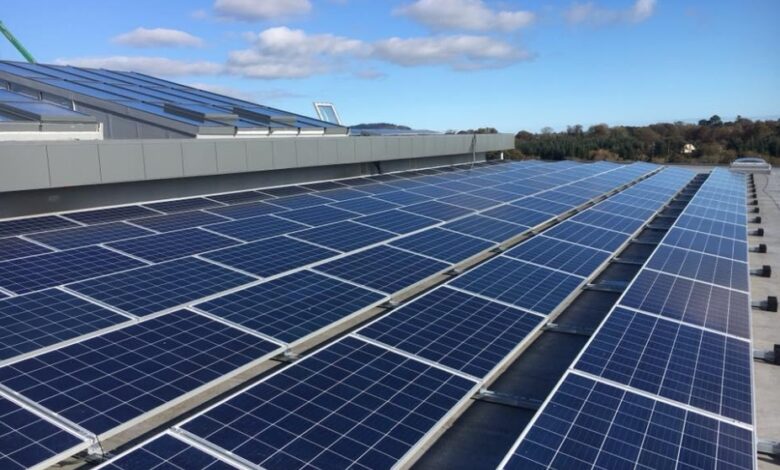
A solar energy company helps businesses design, install and maintain solar panel systems that reduce electricity costs, cut carbon emissions, and improve long-term energy security. In 2026, commercial solar energy companies in the UK are supporting organisations that want stable energy costs and lower operating expenses.
Electricity prices remain unpredictable. Many UK businesses are reviewing their overheads and asking a simple question: how can we control energy spending for the next 20 to 30 years?
For many, commercial solar panels provide the answer.
If you are considering solar panels for business, this guide explains what to expect, what it costs, and how to choose the right commercial solar installer.
-
Growth of Commercial Solar in the UK
The UK commercial solar market continues to expand. Rising grid costs, sustainability commitments and investor expectations are driving adoption across retail parks, factories, farms and office buildings.
Businesses are no longer treating commercial solar installation as a side project. It is now viewed as a financial decision with a measurable return on investment.
Companies installing commercial solar panels today often see payback periods between three and six years, depending on system size and energy consumption patterns.
-
What a Solar Energy Company Provides
A professional solar energy company does far more than fit panels to a roof.
Typical services include:
| Service | What It Covers |
| System design | Site survey, structural checks, energy modelling |
| Commercial solar panel installation | Supply and installation of panels, inverters and mounting systems |
| Grid application | Distribution Network Operator approval |
| Monitoring systems | Real-time production tracking |
| Maintenance support | Servicing and performance checks |
| Funding guidance | Advice on solar panel grants and tax relief |
A reliable commercial solar installer ensures compliance with UK standards such as MCS certification and electrical regulations.
-
Types of Commercial Solar Installations
Different buildings require different system layouts.
-
Rooftop Systems
The most common solution for warehouses, distribution centers, and office buildings.
-
Ground-Mounted Systems
Suitable where land is available and roof space is limited.
-
Solar Car Ports
Installed over car parks to generate electricity while offering sheltered parking.
-
Agricultural Installations
Popular with farms looking to reduce operating costs.
Each commercial solar installation is tailored to the building’s structure, orientation, and energy usage.
-
Commercial Solar Panel Grants and Financial Support
Many businesses search for commercial solar panel grants before committing to installation.
While large national grants are limited in 2026, support is available through:
- Smart Export Guarantee payments for surplus electricity
- Annual Investment Allowance for capital expenditure
- Local authority energy efficiency schemes
Here is a simplified overview:
| Incentive | Benefit |
| Smart Export Guarantee | Payment for exported electricity |
| Capital Allowances | Reduced taxable profit |
| Local schemes | Targeted SME support |
If you want updated funding details, click here, read more on the official government energy pages.
-
Cost of Commercial Solar Installation UK in 2026
Pricing depends on roof size, electrical demand, and system complexity.
| System Size | Estimated Cost Range | Typical Payback |
| 30kWp | £30,000 to £40,000 | 4 to 6 years |
| 100kWp | £75,000 to £110,000 | 3 to 5 years |
| 250kWp | £170,000 to £250,000 | 3 to 4 years |
Figures are based on average UK commercial installation data for 2025 to 2026.
Most commercial solar installation UK projects achieve strong long-term savings once capital costs are recovered.
-
How to Choose the Right Commercial Solar Installer
Not all commercial solar energy companies deliver the same level of expertise.
Before signing a contract, check:
-
Accreditation
Look for MCS, RECC, or NICEIC certification.
-
Track Record
Request case studies within your industry.
-
Warranty Terms
Panel warranties usually extend to 25 years.
-
Monitoring and Aftercare
Ongoing performance checks protect your investment.
A reputable commercial solar installer should provide transparent proposals with realistic financial projections.
-
Why Businesses Work with Excel Energy UK
At Excel Energy UK, we specialise in commercial solar panel installation UK projects for industrial and commercial premises.
We manage feasibility studies, system design, grid applications, and installation from start to finish. Ongoing monitoring ensures performance remains consistent year after year.
Excel UK works closely with clients to calculate projected savings and provide realistic return estimates before work begins.
If your business consumes significant daytime electricity, a professionally designed solar system can reduce operating costs for decades.
Click here, read more about our commercial solar services and explore how solar energy can support your organisation.
-
Benefits of Commercial Solar Panels for Business
Installing commercial solar panels offers several long-term advantages:
- Lower electricity bills
- Greater protection against energy price increases
- Improved environmental credentials
- Increased asset value
- Stronger ESG reporting position
For many organisations, commercial solar installation now forms part of wider sustainability planning.
-
Key Considerations Before Installation
Before proceeding, businesses should evaluate:
- Roof condition and structural strength
- Daytime electricity usage levels
- Export capacity to the grid
- Long-term property plans
A detailed site survey by an experienced solar energy company ensures realistic expectations from the outset.
Commercial solar continues to gain momentum across the UK because it offers practical financial value. With careful planning and the right commercial solar installer, businesses can secure stable energy costs and long-term savings.