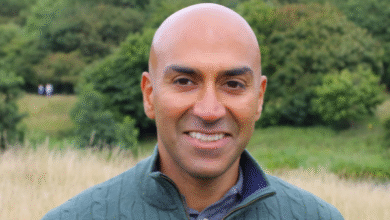
Harry Savage: The Brilliant Palaeontologist Redefining Ancient Life Studies
Unveiling the Journey, Discoveries, and Life of the University of Manchester Researcher


Harry Savage is a distinguished palaeontology PhD student at the University of Manchester, based in Southampton, England, whose research explores the evolution of locomotion in early bilaterians—some of Earth’s earliest complex organisms. As a public speaker and freelance science communicator, he is recognized for his deep passion for understanding how ancient creatures moved and evolved. His growing academic influence, combined with his engaging communication style, has made him a rising name in the world of evolutionary biology and palaeontology.
Early Life and Background of Harry Savage
Born and raised in Southampton, England, Harry Savage showed a fascination for natural history and prehistoric life from a young age. His curiosity about how life evolved on Earth led him to pursue academic excellence early on. Surrounded by the coastal and fossil-rich landscapes of southern England, he was inspired to understand the deeper story behind the evolution of movement in early animal life.
As a student, Savage’s interests leaned toward evolutionary biology, ancient ecosystems, and fossil anatomy. His academic journey naturally progressed toward a research-focused career, allowing him to bridge his love of history with cutting-edge scientific inquiry. His early exposure to the natural world shaped his later passion for palaeontology, leading him to explore questions that remain central to evolutionary science today.
Academic Journey and Research at the University of Manchester
Harry Savage is currently pursuing his PhD in Palaeontology at the University of Manchester, one of the United Kingdom’s leading research institutions. His doctoral research centers on the evolution of locomotion in early bilaterians, a topic that delves deep into how primitive organisms first developed the ability to move. This area of study is crucial for understanding the foundations of modern animal life and the evolutionary steps that led to complex body plans.
Through his research, Savage uses virtual palaeontology techniques, advanced 3D imaging, and computational modeling to reconstruct ancient life forms. These tools allow scientists to visualize soft-tissue structures, movement patterns, and biomechanics of extinct species. By studying fossilized remains and using digital technologies, Savage’s work contributes valuable insights into how early life evolved mobility—a key evolutionary milestone.
His work has been featured in university research repositories and conference discussions, highlighting the significance of his contributions. Fellow researchers have noted his meticulous approach to data analysis and his ability to translate technical findings into accessible knowledge for both scientific and general audiences.
Harry Savage as a Public Speaker and Science Communicator
Apart from his academic role, Harry Savage is also known as a freelance public speaker. He frequently engages with audiences to share his passion for ancient life, evolution, and scientific discovery. His ability to connect with listeners and explain complex scientific topics in relatable ways has earned him recognition within academic and educational communities.
He has participated in science communication events, university talks, and outreach programs, helping to inspire the next generation of palaeontologists and researchers. His enthusiasm and storytelling approach make science feel alive, bridging the gap between academic research and public understanding.
Savage’s freelance communication work reflects his commitment to making science accessible. Whether through lectures, workshops, or online engagement, he brings prehistoric subjects to life, connecting modern audiences with the wonders of the ancient world.
Research Focus: The Evolution of Locomotion in Early Bilaterians
The focus of Harry Savage’s PhD research—locomotion in early bilaterians—addresses one of the most intriguing evolutionary mysteries. Bilaterians are animals with symmetrical bodies and distinct left-right orientation, characteristics shared by most modern animals, including humans. Understanding how these early creatures began to move reveals how evolution shaped modern animal behavior, structure, and survival.
Savage’s studies investigate fossil evidence, sediment impressions, and digital reconstructions to determine how these ancient organisms interacted with their environment. By combining palaeontology with biomechanics, he uncovers patterns that suggest the first movements were not random but part of an evolutionary leap toward more complex life.
This research not only adds to our understanding of early evolution but also provides valuable context for other scientific fields, including developmental biology, evolutionary genetics, and Earth sciences. His interdisciplinary approach showcases how palaeontology continues to evolve as a modern, technology-driven science.
Harry Savage Wikipedia Overview
Although Harry Savage does not yet have an official Wikipedia page, his growing presence in academic circles suggests that recognition is only a matter of time. His professional profiles and university research pages provide verified information about his PhD work, publications, and public speaking engagements.
As a researcher, Savage’s contributions to the study of virtual palaeontology and early bilaterian movement position him as one of the promising young scientists shaping the future of evolutionary studies. His name is increasingly appearing in academic publications, research networks, and university archives, signaling his emergence as a notable figure in his field.
Harry Savage Age
As of now, Harry Savage’s exact age has not been publicly disclosed. However, given his current stage in academia—pursuing a PhD—it is likely that he is in his mid-to-late twenties or early thirties. His youthful energy and passion for both teaching and research demonstrate the dynamic new generation of scientists reshaping traditional palaeontology through digital and analytical methods.
Harry Savage Family and Personal Life
While Harry Savage keeps his personal life private, it is known that he has strong roots in Southampton, where his family resides. His upbringing in the coastal regions of England likely contributed to his fascination with marine life and ancient ecosystems.
Family support often plays a key role in the lives of researchers, and Savage has credited his background and early exposure to science museums and nature walks as inspirations for his career. His privacy regarding personal details shows his focus on maintaining professionalism and academic integrity while dedicating his efforts to scientific progress.
Harry Savage Net Worth
Since Harry Savage is a research student and academic professional, his net worth is not publicly available. However, PhD researchers typically receive funding through university scholarships, research grants, or teaching assistantships. His freelance public speaking engagements also contribute to his income.
Rather than focusing on wealth, Savage’s career emphasizes intellectual growth and scientific discovery. His contributions to academia, his published research, and his ability to engage the public have far greater value in terms of influence and long-term impact than monetary measures could capture.
Recognition and Academic Contributions
Harry Savage’s work has already attracted attention from academic circles. His involvement in collaborative research projects, particularly those linked to the University of Manchester’s Virtual Palaeontology Group, demonstrates his hands-on approach and technical skill.
By applying digital imaging to fossil analysis, Savage has contributed to a growing body of work that is transforming how scientists interpret the fossil record. His research has the potential to reshape how we understand early evolutionary processes, particularly in relation to animal locomotion and adaptation.
His forward-thinking use of technology sets him apart from traditional fossil researchers. Instead of simply examining fossils visually, he employs computational analysis and 3D reconstruction—methods that provide new depth and accuracy to the field of palaeontology.
Future Goals and Vision
Looking ahead, Harry Savage aims to continue expanding his research while promoting public engagement in science. He envisions a future where palaeontology becomes even more accessible and interactive, driven by technology and digital education.
He also hopes to mentor future students who share his curiosity about ancient life and evolution. By combining teaching, research, and public communication, Savage represents a modern model of a scientist who is both an academic and a communicator.
Impact on the Scientific Community
Harry Savage’s work exemplifies how palaeontology continues to thrive as a discipline that bridges science and history. His studies on early bilaterian locomotion could one day help rewrite parts of evolutionary theory, illustrating how mobility shaped the trajectory of life on Earth.
Moreover, his public speaking and outreach efforts help combat misinformation about science and inspire curiosity among younger audiences. He stands as an example of how scientists can balance research with engagement, ensuring that science remains vibrant and inclusive.
Conclusion: The Promise of a New Generation
Harry Savage is more than just a PhD student—he is a passionate researcher, communicator, and visionary helping to shape the future of palaeontology. His dedication to uncovering the secrets of early animal evolution demonstrates both his intellectual rigor and creative spirit.
From his academic work at the University of Manchester to his outreach efforts as a freelance public speaker, Savage embodies the qualities of a modern scientist: curiosity, communication, and commitment. As he continues to publish, present, and explore, Harry Savage is poised to leave an enduring mark on the study of life’s earliest movements and evolutionary mysteries.