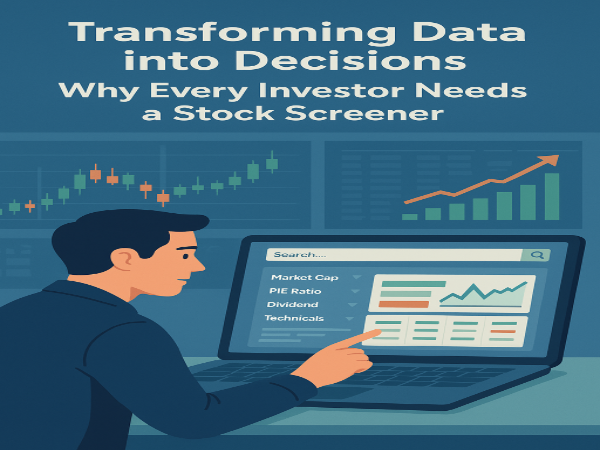
Successful investing isn’t just about following trends or reacting to headlines; it’s about transforming raw information into clear, actionable insights. In today’s fast-moving financial world, where every second counts and market data shifts by the millisecond, traders need a reliable way to filter through endless noise. This is where a stock screener becomes indispensable, a digital compass that helps navigate complex markets and identify opportunities with precision.
The modern trader no longer relies on guesswork. With thousands of stocks listed globally, analyzing each one manually is nearly impossible. But with the help of an advanced screener, investors can turn massive datasets into structured knowledge, helping them make smarter, faster, and more confident investment decisions.
The Growing Complexity of Modern Markets
Today’s stock market operates within a constantly changing ecosystem. Economic policies, geopolitical developments, earnings reports, and global demand all influence prices. Even seasoned investors struggle to stay updated. The sheer volume of information available makes it easy to miss potential opportunities or overlook critical risks.
A stock screener cuts through this complexity by focusing only on data that matters to the investor’s strategy. Instead of scanning thousands of stocks, users can instantly narrow the list to companies that match specific financial, technical, or sector-based criteria. The result is efficiency and focus, two traits that separate professionals from amateurs.
What Makes a Stock Screener Essential
At its core, a stock screener filters stocks based on chosen parameters such as market capitalization, price-to-earnings ratio, volume, dividends, or price performance. However, modern screeners do far more than that. They merge financial metrics, chart patterns, and trend indicators into one cohesive analysis tool.
This means traders can evaluate multiple layers of data simultaneously. For example, while fundamental investors might look for undervalued stocks with solid earnings growth, technical traders can screen for assets showing bullish chart formations or volume surges. In both cases, the screener accelerates decision-making and reduces emotional bias.
Turning Data into Strategy
Raw data is only useful if it can be interpreted effectively. A stock screener transforms numbers into patterns, allowing traders to spot opportunities early. By customizing filters, investors can focus on the exact traits they value, whether it’s growth potential, dividend stability, or price breakouts.
For instance, a trader might configure filters for companies with positive earnings surprises and prices trading above their 50-day moving averages. When combined, these conditions can reveal stocks showing both financial strength and technical momentum, two indicators of future performance. Instead of reacting after the market moves, a trader equipped with the right screener acts before trends fully develop.
Empowering Data-Driven Decision Making
The biggest advantage of using a stock screener lies in its objectivity. Emotions often cloud trading judgment, leading to impulsive decisions. Data-driven analysis, however, removes guesswork. By setting defined parameters, the screener ensures that trades are based on measurable criteria rather than opinions or hype.
Data-driven investors are often more consistent, as their strategies are rooted in logic. This consistency is what builds sustainable success over time, as it minimizes the influence of external market noise.
The Role of Real-Time Data
In volatile markets, timing is everything. Real-time data updates allow traders to act at the right moment. A few minutes can make the difference between catching a breakout and missing it completely. A stock screener equipped with live feeds helps investors identify emerging opportunities instantly, giving them a competitive edge.
Real-time alerts can notify users when specific stocks meet predefined criteria, such as breaking above resistance, crossing a moving average, or reporting higher-than-expected earnings. These features turn the screener into a proactive assistant that continuously works behind the scenes.
Combining Fundamentals and Technical Indicators
While some investors focus purely on company fundamentals, others rely heavily on technical charts. The best results often come from combining both. A dynamic stock screener allows traders to integrate fundamental and technical metrics into a unified analysis.
For example, an investor might screen for companies with low debt ratios, consistent quarterly growth, and prices trading above their long-term moving averages. This approach identifies strong businesses with healthy trends, reducing risk while increasing return potential. Having both perspectives in one view helps traders validate their decisions with greater confidence.
Visualization: Making Data Intuitive
Numbers can be overwhelming when presented without context. That’s why visual tools within screeners, such as heatmaps, charts, and filters, are so valuable. They allow investors to see patterns quickly, revealing which sectors are heating up, which stocks are consolidating, and which are losing strength.
Visual cues turn raw analytics into meaningful insights, making complex market data more accessible. A heatmap, for instance, can show the performance of an entire index or sector at a glance, helping traders decide where to focus next.
How Screeners Improve Discipline
Trading discipline is the foundation of success, and a stock screener helps reinforce it. When emotions take over, especially during rapid market swings, having predefined screening rules keeps investors grounded. Instead of chasing random opportunities or following social media buzz, traders can rely on their criteria to guide decisions.
This approach promotes patience, consistency, and better risk management. Over time, disciplined traders build stronger portfolios because they operate within a structured system rather than reacting impulsively.
Discovering Opportunities Before the Crowd
The most successful trades often happen before everyone else notices the trend. A stock screener gives early access to those signals by identifying stocks that fit strong financial and technical conditions before they gain mainstream attention. By setting smart parameters, traders can detect patterns like volume accumulation, improving earnings outlooks, or price breakouts that suggest future momentum.
These insights enable investors to position themselves ahead of major moves, capitalizing on shifts in market sentiment before they become obvious.
Expanding Horizons with Global Market Access
Modern screeners aren’t limited to a single exchange. Many platforms provide access to global markets, allowing investors to explore stocks from the U.S., Europe, Asia, and beyond. This global reach opens doors to sectors and economies that may outperform others during specific cycles.
By using a stock screener with international coverage, investors can diversify their portfolios more effectively and discover opportunities that local markets might miss. This broader perspective is especially valuable in today’s interconnected global economy.
Integrating AI and Predictive Analysis
The evolution of stock screeners has reached a new frontier with the integration of artificial intelligence. AI-driven screeners don’t just show what’s happening; they also analyze what might happen next. Machine learning models can scan years of historical data, sentiment trends, and price reactions to forecast potential outcomes.
For traders, this technology provides deeper insights into market probabilities. While no prediction is ever certain, AI adds another layer of intelligence that helps investors stay one step ahead.
Avoiding Common Screening Pitfalls
Even with powerful tools, success depends on how traders use them. One common mistake is applying too many filters, which narrows down results too much and eliminates potentially valuable stocks. Another is relying on outdated data or not refreshing criteria to adapt to changing market conditions.
To get the best results, traders should strike a balance, use filters that align with strategy but allow enough flexibility to capture new opportunities. Regularly reviewing and updating screening rules keeps them aligned with evolving trends.
Case Study: From Data to Decision
Consider a trader seeking high-growth technology stocks with consistent quarterly earnings growth, above-average trading volume, and prices trending upward over three months. By setting these parameters in a stock screener, they quickly identify a handful of companies that match the profile.
Upon deeper review, one of those stocks shows an upcoming product launch and strong analyst upgrades, a combination that often precedes a price surge. Acting early based on these insights, the trader takes a position before the broader market reacts, transforming analysis into profitable action.
Conclusion
In the world of investing, knowledge is power, but actionable knowledge is profit. A stock screener bridges the gap between endless data and informed decisions. It empowers traders to focus on what matters most, refine their strategies, and uncover opportunities others might overlook.