Tech Giants Envision Future Beyond Smartphones: The Next Era of Digital Innovation
How Leading Technology Companies Are Shaping a World Where Devices Are Immersive, Intelligent, and Seamlessly Integrated Into Daily Life

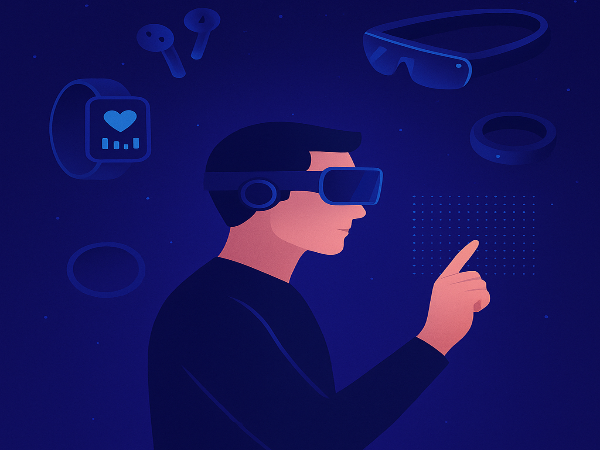
Smartphones have dominated our digital lives for more than a decade, serving as the central hub for communication, commerce, entertainment, and information. However, tech giants envision a future beyond smartphones, where technology moves away from rectangular screens in our hands and becomes immersive, wearable, and intelligent. Through innovations in augmented reality, artificial intelligence, spatial computing, and ambient devices, the next generation of digital interaction promises to be seamless, context-aware, and integrated into the environment around us, fundamentally redefining the way humans interact with technology.
Introduction: The Age of Smartphones and Its Limits
Smartphones have been the cornerstone of the digital revolution, fundamentally transforming the way people communicate, work, shop, learn, and consume media. From the first touchscreen devices to the latest foldable phones, smartphones have continually evolved, yet their form factor—a handheld screen—remains largely unchanged.
While smartphones have brought unparalleled convenience, they also have inherent limitations. Screen fatigue, limited interaction modalities, and the inability to fully integrate with the environment highlight the need for innovation beyond the slab of glass in our hands. Additionally, with smartphone markets reaching saturation in many regions, technology companies are actively exploring what comes next, aiming to redefine interaction models, user experiences, and ecosystems.
The Emerging Vision: Moving Beyond Handheld Screens
Wearables and Ambient Computing
One of the key pillars of a post-smartphone era is wearables. Devices such as smart glasses, intelligent earbuds, AI-enabled rings, and even sensor-embedded clothing are poised to take over tasks traditionally performed on smartphones.
These wearables aim to reduce friction in daily interactions by allowing users to interact via voice, gestures, glances, and environmental awareness. Instead of constantly checking a screen, devices will anticipate needs and deliver context-aware responses, creating a more seamless digital experience. Ambient computing extends this concept further, embedding intelligence directly into the environment through smart homes, vehicles, and public spaces.
Spatial Computing and Immersive Reality
Spatial computing represents a paradigm shift in human-computer interaction. By integrating augmented reality (AR), mixed reality (MR), and virtual reality (VR), users can experience digital information as part of their physical environment rather than confined to a handheld screen.
Smart glasses, headsets, and AR-enabled lenses enable multi-dimensional interactions. This allows users to access information, navigate spaces, collaborate, and entertain themselves without being tied to a traditional device. Spatial computing transforms interaction from tapping screens to natural gestures, glances, and voice commands, offering a more immersive and intuitive interface.
Artificial Intelligence as the Core Interface
Artificial intelligence (AI) will redefine how humans interact with technology in the post-smartphone era. Instead of relying on apps and manual input, AI-driven devices will anticipate user needs, provide proactive assistance, and adapt to contextual information in real-time.
From virtual assistants to intelligent companions, AI will act as the central interface, seamlessly connecting multiple devices and services. Users will no longer need to think in terms of apps; instead, technology will operate in the background, delivering outcomes and experiences without explicit commands.
Major Players and Their Strategies
Meta Platforms
Meta has been at the forefront of the post-smartphone vision with its investments in AR and VR technologies. Through products like smart glasses and headsets developed by its Reality Labs division, Meta is focused on creating immersive experiences that can eventually replace many smartphone functions. The company emphasizes social connectivity, spatial computing, and AI-driven interaction as key components of its strategy.
Apple Inc.
Apple takes a measured yet ambitious approach. While the iPhone remains central, Apple is expanding its ecosystem with products like the Apple Watch, AirPods, and Vision Pro headset. Its strategy focuses on gradual evolution, integrating spatial computing and AI while maintaining the high standards of user experience and ecosystem continuity. Apple aims to transform the smartphone from a dominant interface to a component of a larger, interconnected system.
Google LLC
Google is pursuing ambient intelligence, AI integration, and XR devices as part of its post-smartphone roadmap. With work on AR-enabled glasses, intelligent assistants, and Android XR platforms, Google envisions a world where smartphones serve as just one node in a broader network of interconnected devices and services.
Other Innovators
Other companies, including Microsoft, Samsung, Huawei, and emerging startups, are actively exploring wearable technologies, mixed reality, AI-driven devices, and brain-computer interfaces. These players collectively contribute to a rapidly evolving ecosystem, each bringing unique expertise and approaches to the next era of computing.
Technologies Driving the Shift
Smart Glasses and Head-Mounted Displays
Smart glasses are arguably the most visible technology challenging the smartphone’s dominance. Modern iterations integrate AR capabilities, voice control, and AI assistance, creating an immersive experience that blends the digital and physical worlds.
Wearables and Sensor-Embedded Devices
From rings and earbuds to smart clothing and skin patches, wearables are becoming smarter, smaller, and more integrated into daily life. These devices provide constant monitoring, contextual awareness, and proactive assistance, extending capabilities beyond the smartphone.
Ambient and Contextual Computing
Ambient computing distributes intelligence across environments rather than concentrating it in a single device. This approach allows homes, offices, vehicles, and public spaces to interact intelligently with users, creating seamless experiences without requiring constant attention to a handheld device.
AI-Powered Interfaces
AI will enable predictive, adaptive, and personalized interfaces. It will allow devices to anticipate user needs, coordinate multiple hardware and software systems, and provide seamless digital experiences that feel natural, intuitive, and invisible.
Connectivity and Infrastructure
The post-smartphone ecosystem relies on high-speed connectivity, edge computing, and intelligent networks. Advances in wireless technology, including 5G and 6G, will support real-time data processing, low-latency interactions, and immersive experiences critical for wearables and ambient devices.
Challenges and Barriers to Adoption
Usability and Design
Wearable and immersive devices must be lightweight, stylish, comfortable, and intuitive. Poor design or ergonomics could hinder adoption, making usability a critical factor in the success of post-smartphone technologies.
Privacy and Security
With devices constantly sensing the environment and processing personal data, privacy concerns are paramount. Ambient intelligence, AI assistants, and neural interfaces raise ethical questions about surveillance, consent, and data usage.
Cultural and Behavioral Adaptation
Society has deeply ingrained habits centered on smartphones. Transitioning to new interfaces will require significant behavioral and cultural adaptation, including acceptance of wearable devices and trust in ambient intelligence.
Cost and Accessibility
High costs of early-stage devices can limit adoption. Mass-market success depends on affordability, accessibility, and clear value propositions that surpass the benefits of smartphones.
Market Implications
As smartphone markets mature and growth slows, companies are seeking the next major platform for revenue and influence. Early adoption of post-smartphone technologies could define competitive advantage for decades. Ecosystem control, including apps, services, and data, will be critical for companies aiming to dominate this emerging landscape.
The market potential for devices and services beyond smartphones is massive, with estimates projecting trillions of dollars in opportunity over the next decade. This new era will likely redefine entire industries, from social networking and entertainment to healthcare and education.
A Timeline for Transition
-
Short-term (1–3 years): Continued dominance of smartphones, incremental adoption of wearables and AR prototypes. Hybrid ecosystems where phones complement other devices.
-
Medium-term (3–7 years): Broader adoption of smart glasses, AI assistants, and ambient computing devices. Smartphones start to lose primacy in some tasks.
-
Long-term (7–15 years): Emergence of a new primary interface. Smartphones become one of many nodes in an integrated network of intelligent devices. Full transition will depend on cultural, technological, and infrastructure readiness.
Implications for Consumers and Society
Everyday Life
Users will experience technology that integrates seamlessly into their environment, reducing reliance on handheld screens. Interaction may shift to gestures, glances, voice commands, and AI-assisted decision-making, freeing attention for more meaningful activities.
Businesses and Developers
Developers and businesses must prepare for multi-modal, context-aware platforms. Apps, services, and content need to adapt for immersive, ambient experiences that span multiple devices rather than being screen-centric.
Cultural and Ethical Considerations
The shift will raise privacy, ethical, and societal questions. Ambient intelligence and pervasive sensors require careful regulation and responsible design to balance innovation with trust, equity, and user autonomy.
The Future of Human-Technology Interaction
The post-smartphone era promises a revolution in how humans interact with technology. Devices will no longer dominate attention but will function as intelligent companions embedded in daily life. Wearables, AI, and ambient computing will create a fluid, immersive digital landscape where interaction is natural, effortless, and deeply integrated with the environment.
Tech giants envision this future as one of interconnected ecosystems, where intelligence is distributed across devices and spaces, transforming the way we work, play, learn, and communicate. While the transition will be gradual, the blueprint is clear: the smartphone as we know it will evolve, becoming part of a larger, more integrated digital ecosystem.
Conclusion
Tech giants envision a future beyond smartphones, driven by advances in wearables, spatial computing, AI, and ambient intelligence. The next decade promises a radical redefinition of human-technology interaction, where devices are intelligent, immersive, and seamlessly integrated into daily life. For consumers, developers, and society at large, this represents not just a shift in tools, but a transformation in how we experience the digital world. The smartphone will remain, but it will no longer be the centerpiece — a new era of computing is already emerging, and it promises to reshape our lives in ways previously imagined only in science fiction.