Future Automation: Transforming Architecture, Audio Visual Design, and the Way We Live
How Future Automation Is Redefining Intelligent Spaces Through Advanced Engineering and Smart Architectural Solutions

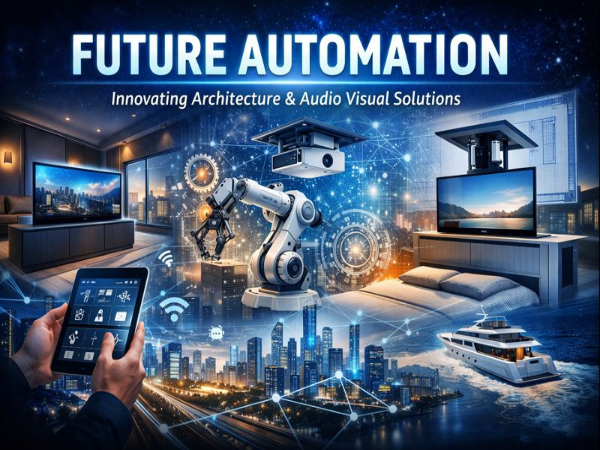
Future automation refers to the advanced integration of intelligent engineering, automated architectural systems, and audio visual solutions that enhance functionality, aesthetics, and user experience in modern spaces. By seamlessly concealing and revealing technology, future automation enables homes, offices, and commercial environments to become smarter, more efficient, and visually refined while maintaining architectural integrity and design excellence.
Introduction to Future Automation
Future automation is no longer a concept of tomorrow—it is actively shaping the way we design, build, and experience spaces today. From luxury residences to corporate environments, automation is redefining how technology interacts with architecture. Rather than technology dominating a space, future automation focuses on intelligent integration, where systems operate silently, efficiently, and invisibly.
At its core, future automation combines mechanical engineering, architectural innovation, and audio visual expertise to create environments that respond intuitively to human needs. This evolution is driven by the demand for cleaner design aesthetics, smarter living solutions, and adaptable spaces that can evolve with technology over time.
What Is Future Automation?
Future automation is the practice of designing and implementing automated systems that integrate technology seamlessly into architectural environments. These systems are engineered to move, conceal, protect, and present audio visual equipment and architectural elements without disrupting the visual harmony of a space.
Unlike basic automation, which often focuses on functionality alone, future automation prioritizes:
-
Precision engineering
-
Design-led integration
-
Longevity and reliability
-
User-centric operation
The result is technology that enhances spaces without drawing attention to itself.
The Role of Engineering in Future Automation
Engineering is the foundation of future automation. Every automated mechanism must be carefully designed to support weight, movement, safety, and durability while operating quietly and smoothly. Precision engineering ensures that automated systems perform consistently over years of use.
Advanced materials, controlled motion systems, and rigorous testing processes are essential components. These systems must also be adaptable to different environments, whether installed in residential interiors, commercial buildings, or marine settings.
Engineering excellence allows future automation solutions to operate seamlessly, blending into architectural designs while delivering exceptional performance.
Architectural Integration and Design Harmony
One of the defining principles of future automation is architectural harmony. Technology should not disrupt design—it should enhance it. Automated architectural solutions are created to align with materials, finishes, and spatial layouts chosen by architects and interior designers.
Key architectural automation concepts include:
-
Concealed technology
-
Minimalist design compatibility
-
Custom finishes and dimensions
-
Structural alignment with buildings
By embedding automation within architecture, future automation preserves clean sightlines and uncluttered spaces while delivering advanced functionality.
Audio Visual Solutions in Future Automation
Audio visual technology plays a central role in future automation. Modern spaces demand high-performance displays, immersive sound systems, and flexible viewing options. However, visible screens and equipment can compromise design aesthetics.
Future automation solves this challenge by integrating AV solutions that can:
-
Appear only when needed
-
Retract when not in use
-
Rotate, lift, or slide into position
-
Remain protected from environmental factors
This approach allows users to enjoy premium audio visual experiences without permanent visual intrusion.
Residential Applications of Future Automation
In residential environments, future automation elevates everyday living. Homes become more adaptable, functional, and elegant through intelligent automation.
Common residential applications include:
-
Automated display concealment
-
Hidden entertainment systems
-
Motorized architectural elements
-
Multi-purpose living spaces
Future automation enables homeowners to transform rooms instantly, creating entertainment spaces, work environments, or relaxation areas with the touch of a button.
Commercial and Corporate Environments
In corporate settings, future automation enhances productivity, professionalism, and adaptability. Boardrooms, conference areas, and collaborative spaces benefit greatly from automated systems that support presentations and meetings.
Key benefits in commercial spaces include:
-
Efficient space utilization
-
Professional visual presentation
-
Reduced setup time
-
Improved user experience
Automation ensures that technology supports business goals without distracting from the environment.
Hospitality and Luxury Spaces
Hotels, resorts, and high-end venues rely heavily on aesthetics and guest experience. Future automation allows these spaces to offer cutting-edge technology while maintaining luxury appeal.
In hospitality environments, automation supports:
-
Seamless guest interaction
-
Clean and elegant interiors
-
Flexible room configurations
-
Enhanced comfort and entertainment
These solutions help create memorable experiences while maintaining operational efficiency.
Marine and Specialized Environments
Marine and specialized environments present unique challenges such as movement, moisture, and limited space. Future automation addresses these challenges through specialized engineering and materials.
In these environments, automation systems must be:
-
Durable and corrosion-resistant
-
Compact and space-efficient
-
Safe and reliable under motion
The adaptability of future automation allows it to perform flawlessly even in demanding conditions.
Customization and Bespoke Automation
One of the strongest advantages of future automation is customization. No two projects are identical, and automated solutions must be tailored to specific requirements.
Bespoke automation allows for:
-
Unique architectural dimensions
-
Custom materials and finishes
-
Specialized motion paths
-
Project-specific engineering solutions
Customization ensures that automation enhances rather than restricts design creativity.
Sustainability and Efficiency in Future Automation
Sustainability is becoming increasingly important in modern design. Future automation contributes to sustainability by improving energy efficiency and reducing waste.
Key sustainability benefits include:
-
Reduced power consumption
-
Efficient use of space
-
Longer product lifecycles
-
Smart system control
Automation allows technology to operate only when needed, reducing unnecessary energy usage.
User Experience and Control Systems
A defining feature of future automation is ease of use. Advanced systems are designed to be intuitive, reliable, and accessible to all users.
User experience is enhanced through:
-
Simple control interfaces
-
Smooth and silent operation
-
Predictable system behavior
-
Minimal maintenance requirements
Automation should feel natural, not complicated.
Safety and Reliability Standards
Safety is critical in automated architectural systems. Future automation incorporates rigorous safety features to protect users and equipment.
These features may include:
-
Obstacle detection
-
Load monitoring
-
Controlled movement speeds
-
Emergency stop functions
Reliability is ensured through extensive testing and quality control.
The Evolution of Future Automation Technology
As technology continues to advance, future automation evolves alongside it. Emerging innovations include smarter sensors, improved materials, and more efficient motion systems.
The future of automation will focus on:
-
Greater adaptability
-
Improved sustainability
-
Enhanced integration with smart environments
-
Increased personalization
Automation will continue to become more intelligent, discreet, and responsive.
Why Future Automation Matters
Future automation is not just about convenience—it is about redefining how technology and architecture coexist. It allows designers, engineers, and users to create spaces that are functional, beautiful, and future-proof.
By prioritizing quality, precision, and integration, future automation sets a new standard for intelligent environments.
Conclusion
Future automation represents the intersection of engineering excellence, architectural innovation, and intelligent technology integration. By concealing complexity behind elegant design, it transforms spaces into adaptable, efficient, and visually refined environments.
As homes, businesses, and public spaces continue to evolve, future automation will remain a driving force in shaping how we live, work, and interact with technology—quietly, intelligently, and beautifully.