Introduction: Moving Beyond Simple Labels
Within plant taxonomy, classification plays a vital role in helping researchers, historians, and enthusiasts understand variation across species. Few plant groups generate as much discussion around classification as cannabis, particularly when examining how different varieties have been identified and described over time. Rather than relying on surface-level assumptions, a closer look at structure, origin, and botanical traits reveals a more nuanced picture.
Origins of Traditional Classification
Early classification of cannabis varieties was heavily influenced by geography and physical appearance. Botanists observing plants from different regions noted consistent differences in height, leaf shape, and growth patterns. These observations formed the foundation for distinguishing broad categories that are still referenced today. While modern research continues to evolve, these traditional classifications remain useful as descriptive tools rather than rigid definitions.
Physical Characteristics and Growth Structure
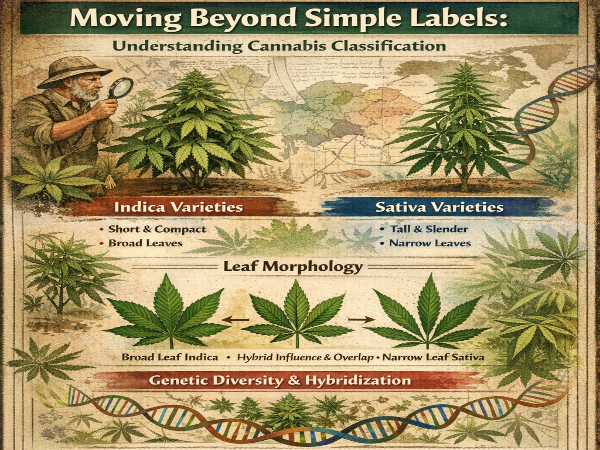
Plants commonly associated with Indica strains are typically described as shorter and more compact in structure. Their leaves often appear broader, with denser foliage that reflects adaptation to specific environmental conditions. This compact morphology has long been linked to regions with harsher climates, where resilience and efficiency were key to survival.
In contrast, varieties grouped under Sativa strains are often characterised by taller growth patterns and narrower leaves. These plants historically developed in areas closer to the equator, where longer daylight hours influenced their structural evolution. Their elongated form allowed them to compete effectively for light in open environments, shaping their distinct appearance.
Leaf Morphology and Visual Identification
Leaf structure has traditionally played a significant role in visual classification. Broader leaflets are commonly associated with one category, while thinner, more elongated leaflets are linked to another. However, modern hybridisation has introduced significant overlap, making visual identification less definitive than it once was.
Despite this, leaf morphology remains a useful educational reference point. It helps explain how environmental pressures influence plant adaptation and why certain physical traits persist across generations, even as genetics become more complex.
Genetic Diversity and Hybrid Influence
Contemporary cannabis genetics are rarely limited to a single lineage. Decades of selective breeding have resulted in extensive genetic crossover, blending traits from multiple ancestral lines. As a result, many modern varieties express a mix of characteristics that challenge traditional labels.
This genetic diversity highlights the importance of viewing classification as a spectrum rather than a binary system. From an informational standpoint, understanding this complexity provides a more accurate picture of how plant genetics function and evolve over time.
Cultural Interpretation and Modern Understanding
Over the years, traditional categories have taken on cultural significance beyond their original botanical meaning. These interpretations have shaped how varieties are discussed, marketed, and understood by the wider public. While these narratives can be useful for general reference, they do not always reflect the underlying genetic reality.
Educational content increasingly emphasises measurable traits—such as structure, lineage, and stability—over simplified labels. This shift supports a more informed and scientifically grounded discussion around plant classification.
Why Botanical Context Still Matters
Even with modern genetic tools, historical classification remains relevant as a framework for learning. It offers insight into how early botanists approached plant identification and how environmental factors shaped natural variation. When viewed correctly, these categories serve as reference points rather than definitive boundaries.
Conclusion: A More Informed Perspective
Understanding the distinctions between traditional cannabis categories requires moving beyond assumptions and exploring botanical context. By examining structure, origin, and genetic diversity, readers gain a clearer and more accurate understanding of how these classifications developed. When approached as educational tools rather than fixed rules, Indica and Sativa classifications continue to offer value in explaining the rich complexity of plant genetics.