Introduction
In environments where fire safety and noise control are equally critical, material choice becomes more than a technical decision—it becomes a safety requirement. Class 0 Foam, particularly Impregnated Class 0 Foam, has emerged as a trusted solution for industries operating under high fire-risk and acoustic-demand conditions. From engine rooms and generator enclosures to marine and automotive interiors, this specialised foam offers a rare balance of fire resistance, sound absorption, and installation flexibility.
This article explores what makes Class 0 Foam unique, how it performs in real-world applications, and why it is increasingly specified across industrial, commercial, and transport sectors.
Understanding Class 0 Foam and Fire Performance Standards
Class 0 Foam is a fire-resistant acoustic foam that has been chemically treated with a mineral compound to achieve a nil burn rate. This treatment ensures that the foam does not contribute to flame spread or support combustion, making it suitable for high-risk environments where fire safety regulations are strict.
What Makes Impregnated Class 0 Foam Different?
Unlike standard acoustic foams, Impregnated Class 0 Foam undergoes a specialised impregnation process that embeds fire-resistant compounds throughout the foam structure. This results in:
- Chemically inert material
- Non-dusting and non-fibrous composition
- Long-term fire resistance without surface degradation
Because the fire-retardant properties are integrated into the foam rather than applied as a surface coating alone, performance remains consistent over time—even in demanding conditions.
Acoustic Performance in High-Noise Environments
One of the strongest advantages of class 0 Foam is its exceptional sound absorption capability, especially in mid to high-frequency ranges. The open-cell polyurethane structure allows sound waves to enter the foam, where energy is dissipated rather than reflected.
Ideal Applications for Noise Control
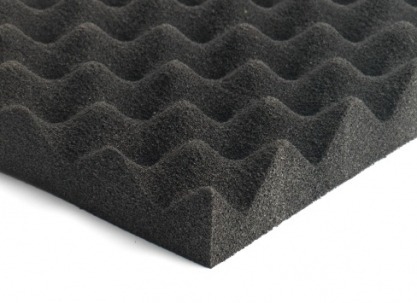
Class 0 profile foam is particularly effective in environments such as:
- Engine rooms and machinery enclosures
- Generator canopies
- Heavy vehicles and transport cabins
- Industrial plant rooms
- Marine engine compartments
In these spaces, excessive reverberation can increase noise exposure risks and reduce operational comfort. High-density Class 0 Foam helps control these issues without adding excessive weight or thickness.
Flexibility, Formability, and Installation Advantages
Another defining feature of Impregnated Class 0 Foam is its flexibility. The foam can be:
- Easily cut to size
- Formed around curved surfaces
- Shaped to fit complex geometries
This makes it ideal for retrofitting existing equipment or lining irregular surfaces where rigid acoustic panels would be impractical.
Safe and Easy Handling
The material is designed to be safe to handle, with no fibre shedding or erosion caused by air movement. This is especially important in enclosed environments such as cabins, vehicle interiors, and HVAC-adjacent installations.
High-Density Class 0 Foam for Enhanced Acoustic Control
For applications requiring superior sound absorption, high-density Class 0 profile foam is often specified. This variant offers:
- Increased mass for improved acoustic damping
- Greater durability in high-vibration environments
- Stable performance under constant airflow
Because it does not migrate or degrade, it remains effective over long operational periods, reducing maintenance requirements.
Automotive and Transport Applications
In the automotive sector, Class 0 Foam is frequently used in:
- Cabin trim panels
- Headliners
- Engine bay insulation
A Silver Dolphin fabric facing is often recommended in these cases, enhancing durability while maintaining acoustic and fire-resistant properties.
Facing Materials and Composite Options
To meet diverse technical requirements, class 0 Foam can be supplied with an extensive range of facing materials and surface treatments.
Available Enhancements Include:
- Foil-facing for heat and fire reflection
- PVC barriers (such as C03/9 PVC) for sound isolation
- Spray-applied surface coatings
- Composite constructions with lead foil or damping sheets
For marine or high-heat environments, a foil-faced Class 0 Foam option is commonly used, acting both as a thermal shield and an acoustic absorber.
Formats and Supply Options
Class 0 Foam is available in multiple formats to suit different installation needs:
- Sheets for flat surface lining
- Roll foam for continuous coverage
- Profiled foam for enhanced absorption
- Faced foam for exposed or decorative applications
Self-adhesive backing is also available, simplifying installation and reducing downtime in operational environments.
Key Benefits of Class 0 Profile Foam
The growing demand for Impregnated Class 0 Foam is driven by a combination of safety, performance, and practicality.
Core Benefits at a Glance
- Nontoxic and safe for enclosed environments
- Fire-resistant with nil burn rate
- Flexible and easy to cut
- CFC and HCFC free, supporting environmental compliance
- Non-fibrous, with no dust or erosion
- Available with self-adhesive backing
These features make Class 0 Foam suitable not only for industrial use but also for transport, commercial, and specialist architectural projects.
Acoustic Foam vs True Soundproofing: Setting Expectations
While class 0 Foam is highly effective at controlling internal acoustics, it is important to understand its role correctly.
What It Does Well
- Reduces echo and reverberation
- Improves speech clarity
- Enhances acoustic comfort
What It Does Not Do
- Prevent sound from entering or leaving a space entirely
For full soundproofing, Class 0 Foam is often combined with mass-loaded barriers, dense panels, or structural isolation systems. When used as part of a layered solution, its effectiveness increases significantly.
Installation Best Practices for Optimal Results
To achieve the best acoustic performance, proper installation is essential.
Practical Installation Tips
- Cover at least 20–30% of surface area for noticeable improvement
- Focus on reflection points and noise concentration zones
- Ensure surfaces are clean before applying adhesive-backed foam
- Combine with barriers where sound containment is required
Correct placement often matters more than full coverage, particularly in machinery or vehicle interiors.
Durability, Maintenance, and Long-Term Performance
Class 0 Foam is designed for long-term use in challenging environments.
Maintenance Guidelines
- Light vacuuming or soft brushing for dust removal
- Avoid water saturation and harsh chemicals
- Protect from prolonged UV exposure where possible
When installed correctly, Impregnated Class 0 Foam maintains both its fire-resistant and acoustic properties for years without degradation.
About the Manufacturing Expertise Behind Class 0 Foam
Manufactured by specialists within the Acousta group, Class 0 Foam products are produced using advanced processing techniques. Foam, rubber, and plastic components are cut and shaped from blocks, sheets, and rolls using band saws, CNC machines, and water jets, ensuring precision and consistency to customer specifications.
This manufacturing flexibility allows tailored solutions for unique industrial, marine, and transport requirements.
Conclusion: A Smart Choice for Fire Safety and Acoustic Control
Class 0 Foam, and particularly Impregnated Class 0 Foam, delivers a reliable solution for environments where fire resistance and acoustic performance cannot be compromised. Its chemically inert composition, excellent sound absorption, and adaptability to complex installations make it a preferred choice across multiple sectors.
Whether used in engine rooms, vehicles, marine applications, or industrial facilities, Class 0 Foam provides peace of mind through safety, performance, and durability.
For enquiries about Class 0 Foam solutions tailored to your specific application, don’t hesitate to contact Acoustafoam via their contact form. Their team will be happy to discuss the most suitable options for your project