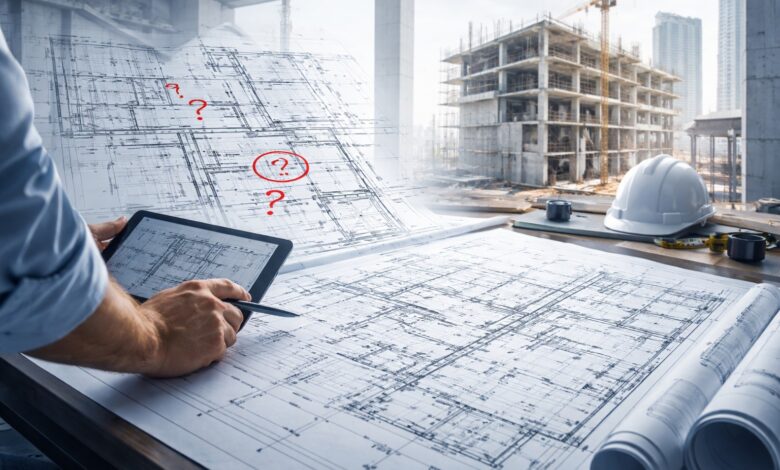
In construction projects, time is rarely lost in dramatic, visible ways. More often, schedules slip because of small, compounding issues that originate long before materials arrive on site. Among the most common and costly of these issues are drafting errors. A missing dimension, an unclear note, or a coordination gap between disciplines can appear minor on paper, yet trigger redesigns, approval delays, RFIs, and rework once construction is underway.
Accurate drafting is not simply a documentation task; it is a foundational element of project execution. Construction drawings serve as the primary communication tool between architects, engineers, contractors, inspectors, and owners. When that communication is incomplete or inconsistent, misunderstandings follow, and misunderstandings lead directly to delays, cost overruns, and strained project relationships.
This article examines the most common drafting mistakes that delay building projects and explains how they occur, why they matter, and how professionals can avoid them through disciplined processes and proven best practices.
Why Drafting Accuracy Matters in Building Projects
Drafting accuracy has a direct impact on nearly every phase of a building project. During permitting and approvals, authorities rely on drawings to verify code compliance, zoning adherence, and life-safety requirements. Errors or ambiguities at this stage often result in resubmissions, extended review cycles, or conditional approvals that disrupt downstream schedules.
Once a project moves into construction, drawings become contractual documents. Contractors price, schedule, and build directly from them. Inaccurate or conflicting information forces teams to stop work, request clarifications, and make assumptions under pressure. Each interruption introduces risk, not only to the timeline but also to quality and safety.
Coordination is another critical factor. Architectural drawings must align precisely with structural systems, mechanical layouts, electrical routing, and plumbing infrastructure. When drafting fails to reflect that coordination, clashes emerge in the field, where they are far more expensive and time-consuming to resolve. This is why many firms rely on rigorous documentation standards and, in some cases, external cad design and drafting services to maintain consistency and technical accuracy across complex drawing sets.
Ultimately, drafting accuracy protects project schedules and budgets by reducing uncertainty. Clear, coordinated, and compliant drawings allow construction teams to work efficiently and confidently, minimizing delays caused by preventable documentation errors.
Common Drafting Mistakes That Cause Project Delays
Incomplete or Missing Dimensions
Incomplete dimensioning is one of the most frequent drafting issues encountered on construction projects. This occurs when key measurements—such as wall lengths, floor-to-floor heights, opening sizes, or offsets—are omitted or partially defined.
These gaps often arise from tight deadlines, reliance on assumptions, or overconfidence that certain dimensions are “obvious.” In reality, what seems obvious to the drafter may not be clear to the contractor interpreting the drawings.
Missing dimensions force builders to pause work and issue RFIs, waiting for clarification before proceeding. In fast-paced construction environments, even a short delay can disrupt sequencing, impact subcontractor availability, and cascade into broader schedule impacts.
Inconsistent Scale Usage
Using multiple scales within a drawing set is common, but problems arise when scales are applied inconsistently or not clearly identified. Plans, sections, details, and enlarged views must all be correctly labeled and coordinated.
Inconsistent scaling often results from copying details between projects, mixing legacy drawings with new work, or inadequate quality checks. When scale errors go unnoticed, contractors may misinterpret dimensions, leading to incorrectly fabricated components or misaligned installations.
Correcting scale-related mistakes typically requires rework, revised shop drawings, and, in some cases, removal and replacement of installed elements—each contributing to project delays.
Poor Layer Management
Layer management in CAD and BIM environments is essential for clarity, coordination, and downstream use of drawings. Poorly organized layers—such as overlapping systems, inconsistent naming conventions, or hidden critical information—create confusion during both review and construction.
This issue often stems from a lack of standardized layer protocols or insufficient training across project teams. When layers are mismanaged, important elements may be overlooked, misinterpreted, or accidentally modified during revisions.
For contractors and consultants, unclear layers slow down drawing navigation and increase the risk of coordination errors, particularly when exporting or integrating files across different platforms.
Lack of Coordination Between Architectural, Structural, and MEP Drawings
Coordination failures between disciplines are among the most damaging drafting mistakes. Examples include beams conflicting with ductwork, lighting clashing with sprinkler heads, or plumbing runs interfering with structural elements.
These issues frequently arise when disciplines work in isolation or rely on outdated backgrounds. Even small misalignments can trigger significant redesign efforts once construction has begun.
Field coordination problems typically require emergency meetings, redesigns, and re-approvals, all of which disrupt schedules and increase costs. In severe cases, work may need to be undone to accommodate corrected layouts.
Outdated or Conflicting Revisions
Revision control is a persistent challenge in construction documentation. When multiple drawing versions circulate without clear tracking, teams may unknowingly work from outdated information.
This problem often results from informal file-sharing practices, inconsistent naming conventions, or inadequate documentation management systems. Once conflicting revisions reach the site, it becomes difficult to determine which information is authoritative.
The result is confusion, misaligned construction efforts, and potential disputes over responsibility for rework. Resolving these issues almost always involves delays while teams reconcile discrepancies.
Non-Compliance with Local Building Codes
Drafting errors related to building codes can halt a project before construction even begins. Common examples include incorrect egress widths, inadequate fire separations, non-compliant accessibility details, or missing life-safety annotations.
These mistakes often occur when codes are not thoroughly reviewed at the drafting stage or when standard details are reused without verifying their applicability to local regulations.
Code-related deficiencies typically surface during plan review or inspections, leading to rejection notices, redesign requirements, and resubmissions. Each cycle adds time and administrative burden to the project timeline.
Ambiguous Notes or Symbols
Ambiguity in notes, legends, and symbols undermines the clarity of construction documents. Vague instructions, undefined abbreviations, or inconsistent symbol usage force contractors to interpret intent rather than follow explicit guidance.
This issue is commonly caused by assumptions that certain conventions are universally understood or by poor coordination between drawing sheets and specifications.
Ambiguous documentation increases the likelihood of errors in the field and generates RFIs that stall progress while clarifications are issued.
How to Avoid These Drafting Mistakes
Preventing drafting-related delays requires deliberate processes and a commitment to quality at every stage of documentation.
Standardized drafting protocols form the foundation. Consistent dimensioning practices, layer standards, symbol libraries, and annotation guidelines reduce variability and improve clarity across drawing sets.
Quality control and peer reviews are equally critical. Independent reviews by experienced professionals can identify missing information, inconsistencies, and coordination issues before drawings are issued. These reviews should be structured, documented, and integrated into project schedules.
Version control and documentation management must be treated as core project responsibilities. Clear revision histories, centralized file storage, and controlled distribution ensure that all stakeholders work from the correct information at all times.
Interdisciplinary coordination should be ongoing, not reactive. Regular coordination reviews—supported by overlay checks or model-based clash detection—help identify conflicts early, when they are easier to resolve.
Code compliance checks should be embedded into the drafting process rather than treated as a final hurdle. Maintaining up-to-date code knowledge and verifying requirements at key milestones reduces the risk of approval delays.
Finally, leveraging technology and experienced drafting professionals enhances accuracy and efficiency. Advanced CAD and BIM tools, when used correctly, support coordination, visualization, and error detection, but only when paired with skilled oversight and disciplined workflows.
Best Practices for Efficient Construction Documentation
Efficient construction documentation is built on prevention rather than correction. Establishing clear expectations at project kickoff—covering drawing standards, coordination processes, and review timelines—sets the tone for disciplined execution.
Maintaining clear communication channels between design and construction teams ensures that questions are resolved quickly and feedback is incorporated into future documentation. Lessons learned from past projects should inform updates to standards and workflows.
Investing time in thorough documentation pays dividends during construction. Complete, coordinated, and unambiguous drawings reduce interruptions, support accurate pricing, and enable smoother sequencing on site.
Most importantly, teams should recognize that drafting is not merely a deliverable but a critical risk-management tool. Treating it with the same rigor as engineering calculations or construction planning leads to more predictable outcomes.
Conclusion
Drafting mistakes rarely appear catastrophic at first glance, yet their impact on building projects can be profound. Incomplete dimensions, coordination gaps, outdated revisions, and ambiguous documentation all contribute to delays that erode schedules, inflate costs, and strain professional relationships.
By understanding why these mistakes occur and adopting structured, proactive approaches to documentation, project teams can significantly reduce avoidable disruptions. Accurate drafting supports efficient approvals, clear communication, and confident construction execution.
As building projects grow in complexity and regulatory scrutiny increases, the importance of precise, well-coordinated construction documents will only continue to rise. Firms that prioritize drafting accuracy position themselves to deliver projects on time, with fewer surprises, and with greater overall project certainty.