How Packaging Line Manufacturers Are Revolutionizing Automation for the Next Decade

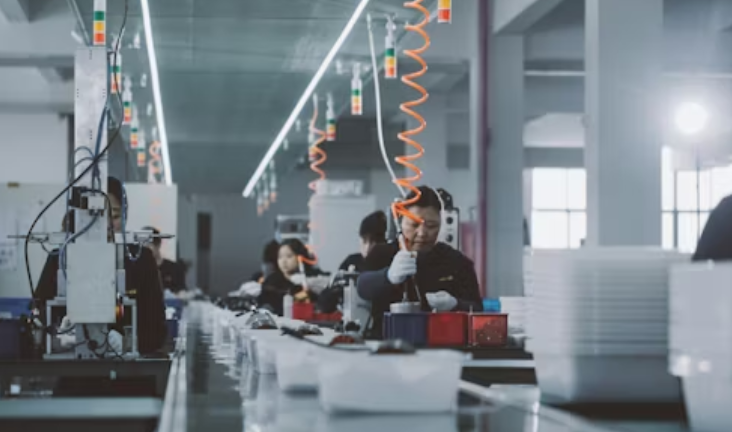
Automation in industry production has gone from beneficial for a competitive advantage to being a necessity. Packaging Line Manufacturers are leading the transformation in automating production, filling, sealing, and labeling. For B2B companies, automating packaging offers efficiency, and in the long run, consistency and scalability.
As industries embrace Industry 4.0, the packaging industry leads in the adoption of automation tools like Ai robotics and intelligent data analysis. These tools are going to transform intelligent automation in manufacturing for the next decade from simple process support to continuous operational optimization.
The Shift Toward Intelligent Packaging Automation.
The packaging industry has entered a new era where automation transcends simple mechanization. Packaging Line Manufacturers now incorporate intelligent system control, real-time data, and process optimization into their machines. These processes enable predictive maintenance, minimizing downtime, and improving accuracy across all products in a production run.
Companies that serve B2B industries like food or beverage, chemicals, or pharmaceuticals must have packaging lines that can change formats, production volumes, and workflows at the drop of a hat. They require advanced, modular systems that can be efficiently reconfigured to meet a variety of production demands.
Contract packers and private-label businesses must also be able to reconfigure their systems to meet the demands of different and multiple products, and the automation of these systems allows them to deliver consistent quality without adding to manual labor, which also helps them reduce possible human errors.
Robotics and Smart Sensors, a Perfect Match
The robotics revolution has touched every industry, and packaging is no exception. Smart sensors that can “see’ have revolutionized the industry and can now manage complex, high precision tasks on a delicate product over thousands of hours of production runs.
Automatic packaging systems have smart sensors that manage filling, pressure, and sealing processes of every pack and require no human supervision, and without human error. Data is centralized, and AI software analyzes to predict maintenance before any system fails.
B2B companies that need automation at a reliable level to manage their high production volumes have been increasing, and this has led to improved automation that is reliable, sustainable, and efficient to reduce costs.
Customization and Modular Design for Industry Needs
There are differences between industries when it comes to packaging. For example, the operations in food and beverage packaging, the pharmaceutical industry, and personal care packaging are all very different. As a result, modular design has become a focus for innovation in packaging line design.
Today’s systems are designed for scalability. This means that businesses can begin with a basic setup, and then expand their systems as their production volumes increase. These modules can include a complete line for the filling, sealing, capping, labeling and coding of cans, all synced together.
In one case, packaging engineers and can filling machine manufacturers work together to design systems that can accurately fill a variety of products including powders, sauces, and granules. By fine-tuning the filling speed and sealing torque, manufacturers are able to ensure that each type of product meets the appropriate quality and safety requirements.
The increase in flexibility offered by modular packaging equipment means that businesses are able to lower their overall costs of ownership while also improving their position in the marketplace as a result of having flexible equipment.
Data-Driven Efficiency and Predictive Maintenance
Perhaps the most remarkable thing about modern packaging lines is their ability to gather and analyze operational data. This ensures a digital transformation of the practice in a way that helps manufacturers optimize their production metrics including cycle times, fill accuracy, patterns of downtime and energy consumption.
With the help of AI, predictive maintenance allows operators to see the signs of wear on certain components before a breakdown happens. By being proactive, this strategy allows companies to reduce expensive machinery breakdowns, avoid unplanned downtimes, and mitigate costly repairs. Also, operators can adjust the machinery and troubleshoot maintenance issues on the spot because of remote monitoring. Technological visibility that allows clients to see operations in real-time is very valuable for B2B companies that can’t afford downtimes, allowing them to boost profitability and productivity. Sustainability and Energy Optimization in Packaging Lines. Packaging automation, like all other sectors, must become more sustainable. Fortunately, replacing older packaging machines for ones that employ energy-efficient drives, servo systems, and optimized material usage create a more sustainable industry. \n\nAutomated packing machines help the environment by reducing waste and improving the speed and precision of packaging. Many machines are now using recyclable materials because more and more facilities are integrated and older machines are being replaced by adaptive technologies that allow for a variety of formats and materials. \n\nAdditionally, more facilities are implementing smart power systems that reduce the amount of energy the machines consume which reduces overall costs, carbon footprints, and costs of operations. Sustainability in automated packaging is becoming more and more relevant. \n\n\n
The Future is Coming for your Industrial Packaging
More convergence among automation, data, and sustainability is coming in the new decade and the future of industrial packaging will consist of self-learning systems packaging products and managing entire production lines without the need for human control. A production line will be able to self-diagnose issues and optimize for efficiency.
These systems are more than advancements in technology, they will provide new levels of operational excellence. New levels of operational excellence in the packaging lines will mean a line will be able to self-analyze, self-adjust, and manage a production line in real-time. Automation systems will allow a business to be operationally excellent, keep employees safe, and provide measurable outcomes. Industrial packaging line manufacturers will be able to provide businesses with the technology to stay operationally advanced.
The End is Near
B2B industries that adopt new automation technology in packaging systems will find the most success in the coming years. Technologies like modular layout systems, robotics, smart sensors, and predictive analytics will allow any sized business to operate with greater efficiency, reduced waste, and better overall quality for the end product. The future of packaging technology will ensure success for businesses willing to operate with greater operational efficiency.
The future involves smart engineering and adaptive clients working together to determine how efficiently and intelligently the world will pack its products. The coming decade will be defined by the leaders of automation innovation.