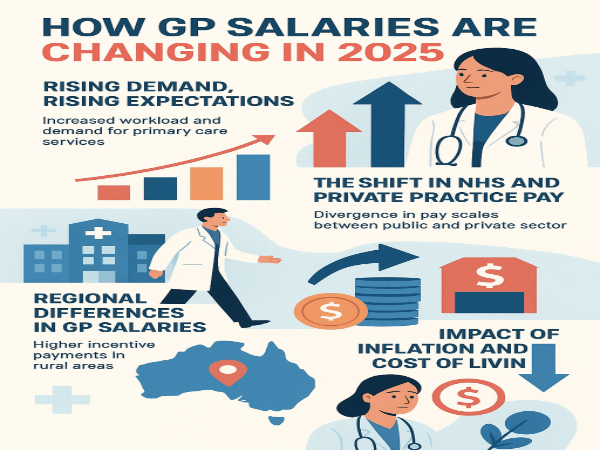
The landscape of healthcare is evolving rapidly, and one area experiencing notable shifts is the GP salary in 2025. Changes in government policies, healthcare demand, and economic pressures are all influencing how much GPs earn, and the trends this year suggest both challenges and opportunities for medical professionals.
Rising Demand, Rising Expectations
The demand for primary care services continues to grow in Australia and worldwide. Population aging, chronic disease management, and a post-pandemic emphasis on preventative care have all increased the workload for GPs. According to Monique Giron “GPs are facing a workload that has never been higher. This has forced governments and private healthcare providers to re-evaluate compensation models to ensure sustainability and retention.”
With this increased demand, salaries are being adjusted not just to reward experience but also to retain practitioners in an increasingly competitive market. The challenge, however, lies in balancing fair compensation with public sector budget constraints.
The Shift in NHS and Private Practice Pay
One of the most noticeable changes in 2025 is the divergence in pay scales between public healthcare systems and private practices. Public sector GPs may see moderate salary increases tied to government budgets, while private practitioners often have more flexibility to set fees and negotiate pay.
Martina Stanley notes, “Private practice has become increasingly attractive for GPs who want control over their income and working hours. While the public sector offers stability, private options allow for a tailored approach to salary and lifestyle balance.”
This trend has encouraged some GPs to transition from public hospitals to private clinics, especially in metropolitan areas where patient demand is highest. Companies like Alecto Australia are stepping in to support this transition by providing advisory services, flexible practice models, and guidance on maximizing income opportunities for GPs.
Regional Differences in GP Salaries
Geography continues to play a significant role in GP earnings. Urban centers may offer higher absolute salaries but come with increased living costs and competitive pressures. In contrast, rural and regional areas often provide higher incentive payments to attract practitioners, though overall earnings may still lag behind city rates.
Monique Giron emphasizes, “Incentives for rural GPs are becoming more sophisticated. Beyond basic salary, these often include housing allowances, relocation support, and professional development funding. These measures aim to address healthcare inequities between urban and rural communities.”
For GPs considering relocation or a change in practice setting, understanding regional salary differences is crucial. Companies such as Alecto Australia are instrumental in helping professionals navigate these choices, offering market insights and negotiation strategies to ensure GPs secure the best possible compensation packages.
Impact of Inflation and Cost of Living
Even with salary increases, GPs in 2025 face the challenge of rising living costs and inflation. According to recent reports, real-term earnings for some practitioners may not have increased significantly when adjusted for inflation, especially in high-demand cities.
Martina Stanley highlights, “Nominal salary growth does not always translate into improved purchasing power. GPs need to consider both gross pay and actual living expenses to understand the true value of their compensation.”
This financial reality has prompted many GPs to explore supplementary income options, such as telehealth services, locum work, or private consultations, which offer both additional revenue and flexibility. Alecto Australia has developed programs to help GPs identify these opportunities while maintaining work-life balance.
Gender and Experience Factors
Salary changes in 2025 are also influenced by experience, specialization, and gender. While experienced practitioners tend to see higher base pay, emerging trends suggest efforts are being made to address gender pay gaps in healthcare. Structured pay scales, transparent promotion pathways, and mentorship programs are helping newer female GPs achieve equitable compensation.
Monique Giron notes, “Gender pay disparities are slowly narrowing in general practice, though systemic issues remain. Awareness and policy adjustments are key to ensuring all GPs receive fair pay for their expertise and contributions.”
The Role of Technology and Telehealth
Technology continues to impact GP salaries indirectly. Telehealth has expanded access to care, and some practices are compensating GPs for virtual consultations at competitive rates. This shift provides flexibility and can influence overall earnings, particularly for GPs who embrace digital healthcare solutions.
Martina Stanley points out, “Telehealth is not just a convenience—it is becoming a revenue stream. Practices that integrate digital consultations effectively can boost GP earnings while improving patient access.”
This trend also encourages GPs to upskill and diversify their service offerings, aligning compensation with the broader capabilities they bring to the practice.
Future Outlook
Looking ahead, the trajectory for GP salaries in 2025 suggests cautious optimism. While public sector pay increases may remain modest, private practice and alternative income streams provide meaningful growth potential. The integration of technology, strategic practice choices, and regional incentives are all shaping how GPs approach their careers financially.
Companies like Alecto Australia continue to play a pivotal role in this evolving landscape, offering consultancy and support to ensure GPs maximize their earning potential while navigating complex healthcare systems.
In conclusion, GP salaries in 2025 are changing in multiple dimensions—sector, location, gender, and technology. For GPs navigating this environment, understanding the interplay of these factors is essential. Staying informed and strategic about career decisions is key to securing financial stability and satisfaction in this evolving field.