Momentum Solar: Inside the Promise, Performance, and Problems of a Major Residential Solar Installer

Introduction
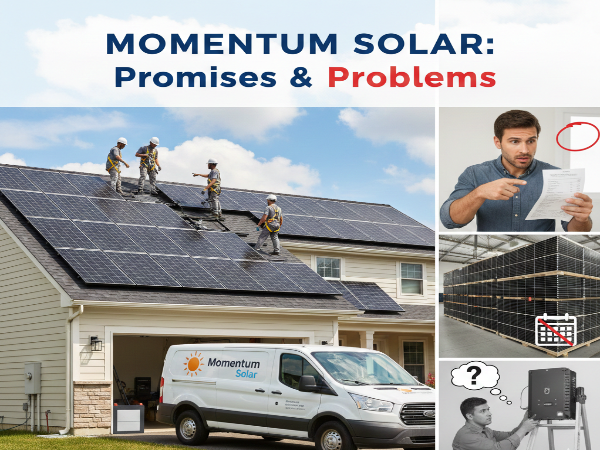
Momentum Solar is one of the more recognizable names in the U.S. residential solar market. The company promotes a full service model that covers design, permitting, installation, and activation. In recent years, solar adoption has accelerated, and companies like Momentum have positioned themselves as guides through what can otherwise feel like a technical and bureaucratic maze.
Yet the company’s reputation is complicated. Marketing materials describe premium equipment, long warranties, and streamlined service. Many customers say the experience matches the promise. Others describe something very different, including poor communication, unplanned delays, and systems that failed to deliver expected savings.
This article examines Momentum Solar’s business model, coverage, customer experience, and industry reputation. It also breaks down the complaints, legal issues, and common questions prospective customers should consider before signing a contract.
Company Overview
Origins and Positioning
Founded in 2009, Momentum Solar grew during a period of steady expansion in residential solar. The company markets itself as a concierge provider. Instead of leaving homeowners to hire separate teams for design, permitting, installation, and electrical interconnection, Momentum handles everything internally.
The company says its in-house staff allows for better quality control, consistent communication, and predictable scheduling. In practice, customer reports paint a mixed picture, but the company’s official pitch is clear. Anyone interested in going solar should only need to deal with one brand from start to finish.
Services and Technical Capabilities
Momentum Solar’s core services include on-site assessments, custom system design, permitting, installation, post-installation monitoring, and optional maintenance support. Customers can choose between ownership and third-party financing. Battery storage is available in select markets. The company emphasizes that its panels are Tier 1, a label used in the solar industry to indicate panels produced by manufacturers with large production volumes and strong financial performance.
Momentum also provides warranties. In many cases this includes a 25-year equipment warranty, a production guarantee that outlines expected energy output, and a workmanship warranty that covers the installation itself. Exact terms vary depending on state, financing method, and equipment selection.
Coverage and Market Reach
Momentum Solar operates in a limited number of states. While the exact list changes over time, the company typically serves about a dozen markets. This means that large portions of the country are outside its territory. For homeowners in California, Texas, or Illinois, Momentum may be unavailable. For those inside the service area, the company competes with both national brands and smaller local installers.
The overlap between coverage and competition is important. Homeowners in states like New Jersey or Florida often have several installers to choose from, each with different pricing structures and timelines. In those situations, Momentum’s all-in-one model can be appealing, but only if the price, equipment, and service align with expectations.
The Appeal: What Momentum Solar Promises and Often Delivers
Streamlined Process
For many homeowners, the biggest hurdle is not the cost of panels but the logistics. Permits, inspections, utility paperwork, and roof assessments can slow down even the simplest project. Momentum’s largest selling point is that it handles the entire chain of tasks internally. Customers who prefer a single point of contact find this approach reassuring.
Many reviews describe smooth installations with clear communication and quick activation. These customers often report that their systems met or exceeded projected energy savings.
Warranty Coverage
Long warranty coverage is another common advantage. The equipment warranty protects against panel defects, while production guarantees outline how much energy the system is expected to deliver over time. For homeowners who want long-term peace of mind, these guarantees help reduce uncertainty.
For leased systems, the warranties are often more comprehensive because the company retains ownership of the equipment. Customers who purchase may receive a different set of terms, something prospective buyers should review closely.
Equipment Quality
Momentum markets its use of Tier 1 solar panels. While the label does not guarantee superior long-term performance, it does indicate that the panels come from established, reputable manufacturers. These systems are designed to produce consistent power for decades, which is essential for homeowners looking for stable long-term energy costs.
Battery Storage Options
Battery storage remains a growing segment of residential solar. Homeowners in areas with frequent storms or unstable grids often want backup power. Momentum offers storage solutions in certain markets, which allows customers to use solar power during outages or reduce reliance on utility electricity during peak hours.
The Problems: Complaints, Delays, and Customer Service Issues
For many homeowners, the experience with Momentum Solar begins well. The sales process is often fast, the equipment appears solid, and the price can look competitive. The trouble tends to appear later, particularly around installation, activation, or warranty service.
Communication Breakdowns
Many of the most frequent complaints involve communication. Customers report unanswered calls, missed appointments, and difficulty getting updates. This becomes particularly stressful when homeowners are waiting on system activation or dealing with a malfunction.
Some customers say they experienced months-long delays while receiving little information about next steps. Others report that once the system was installed and paid for, they struggled to reach support teams when something went wrong.
Installation Delays and Scheduling Problems
Although Momentum advertises a simple, efficient process, numerous reports describe extended wait times. In some cases, what was promised as a one-month timeline turned into several months. Delays can be caused by utility interconnection, municipal permitting, equipment backlogs, or internal scheduling gaps.
While delays are not unusual in the solar industry, Momentum’s detractors say the company does not consistently manage expectations. Several customers said bills for financing began before the system produced any energy, which added to frustration.
Underperforming Systems and Savings Issues
A common frustration among dissatisfied customers is that the system did not produce the savings they were sold. Homeowners reported that their electricity bills stayed the same or even increased after installation.
This can happen for several reasons. The system may have been undersized. Shading or roof angle may have been underestimated. The home’s energy use may have increased. Or the projections provided during the sales process may have been overly optimistic.
While all solar companies face similar risks, customers say Momentum did not always provide realistic performance projections or clear explanations when production fell short.
Warranty and Service Concerns
Many complaints involve warranty service. Homeowners with malfunctioning inverters, faulty wiring, or damaged panels sometimes reported long waits for repairs. Others said they were told their issue was not covered, even when they believed it should have been.
A few customers noted that Momentum attempted to charge service fees for work that appeared to fall under warranty. Others said technicians failed to show up or rescheduled repeatedly without notice.
Sales Tactics and Transparency
Another concern involves the company’s sales methods. Some homeowners said they felt pressured into signing contracts before having time to review details. Others said the representatives made claims about future savings or system performance that were later contradicted by the company’s own documentation.
Momentum does not publish standard pricing online, which leaves customers dependent on sales visits for cost estimates. This lack of transparency makes it harder for homeowners to compare options or understand the full financial picture.
Legal and Reputational Issues
Momentum Solar has faced legal scrutiny in the past. The company was involved in a class action lawsuit that included allegations of discrimination and unfair employment practices. While the case was eventually settled, the allegations contributed to public concern about the company’s internal culture.
There have also been questions about certification. Some critics note that not all Momentum installers are certified by the North American Board of Certified Energy Practitioners. NABCEP certification is not legally required, but it is considered a strong indicator of training and professionalism.
Despite these issues, Momentum maintains a generally positive rating with certain industry organizations. This creates a contrast between third-party evaluations and customer-driven review sites, where feedback tends to be polarized.
Real Customer Experiences: What Homeowners Report
The gap between positive and negative experiences is wide. On the positive side, customers describe fast installations, significant bill reductions, and responsive service. Some say the system performed exactly as promised and that the company kept them informed throughout each step.
Negative reports paint a different picture. Many describe being unable to reach support teams after installation. Others say they spent months waiting for repairs or resolution of system failures. A number of homeowners say they were surprised by unexpected fees or mismatched warranty terms.
These conflicting experiences mirror a larger pattern in the residential solar industry. Companies often grow quickly, and the quality of service can vary from state to state and even crew to crew.
Expert Reviews and Industry Perspectives
Reviewers who evaluate solar companies at a national level tend to give Momentum mixed ratings. Strengths include the equipment quality, the convenience of full-service installation, and the long-term warranties. Weaknesses often involve customer service, pricing transparency, and geographic limitations.
Industry analysts also note that homeowners shopping for solar often benefit from comparing regional installers, who sometimes offer lower prices or more flexible service. Momentum’s model works well for customers who value convenience and prefer a single brand handling the entire project. It works less well for those who want maximum transparency or who value small business support.
What Prospective Customers Should Consider
Anyone evaluating Momentum Solar should approach the process with clear expectations.
Ask these questions early:
- Will the projected energy savings be enough to justify the system cost.
- What happens if the actual output falls short.
- How long is the workmanship warranty and what does it cover.
- Who handles repairs and how long do they take.
- What are the cancellation terms and do they vary by financing method.
- What specific equipment will be installed and what are the manufacturer warranties.
- How long is the expected timeline from contract signing to system activation.
- Will financing payments begin before the system is operational.
Taking time to review each item can prevent future surprises. Many of the most serious complaints involve customers who felt they were misled or not given enough time to evaluate the fine print.
Conclusion
Momentum Solar is a legitimate and established solar installer that offers a comprehensive service model, strong warranty coverage, and reputable equipment. For many homeowners the experience is smooth, and the long-term savings meet expectations.
At the same time, the company has a history of significant customer complaints, serious communication issues, and uneven post-installation support. Homeowners considering Momentum should weigh convenience against the risk of delays or service challenges.
Solar can be a long-term investment that pays off for decades, but only if the system performs and the installer provides consistent support. For that reason, clear communication, contract transparency, and realistic expectations matter more than any marketing promise.