How Portable Power Stations Could Become the Future Currency of Remote Skill-Exchange Communities

Introduction
Over the last decade, work has shifted from offices and centralized environments into flexible, digital systems where people can contribute from anywhere. Remote teaching, consulting, creative collaboration, digital services, and skill exchanges no longer depend on physical boundaries. Yet while the internet has made communication borderless, many remote or rural communities still face a different challenge: access to reliable electricity. Without stable power, laptops remain off, workshops stay dark, and online learning is limited to a dream rather than a practice.
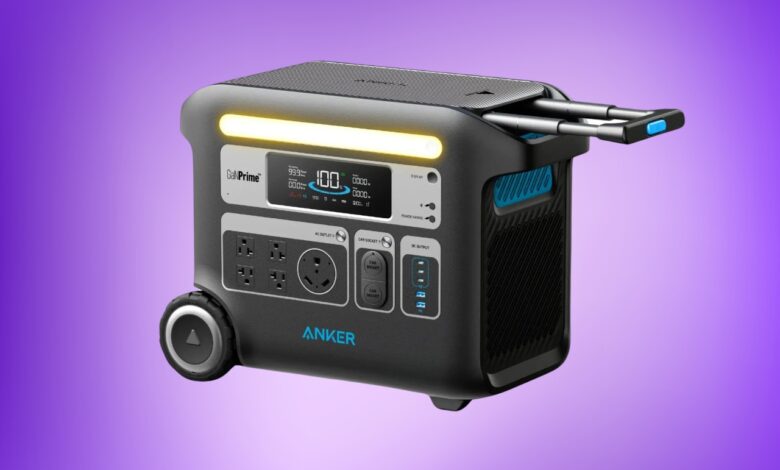
This is where the rise of portable energy technology is transforming possibilities. With a portable power station, workers no longer need to rely on buildings or traditional infrastructure to participate in modern economic life. They can design, build, teach, and share skills from forests, deserts, small villages, beaches, or temporary digital hubs. The ability to bring stable electricity anywhere has quietly enabled a new wave of freelance communities and skill-sharing groups that are not tied to the grid.
The result is a new kind of micro-economy built on independence, mobility, and cooperation. Portable power is not only supporting remote workers but changing how they collaborate. Energy itself is becoming a shared resource that helps people trade knowledge, support each other, and build sustainable creative networks in places where traditional development may still be decades away.
Power as a Form of Resource Sharing
For most of modern history, participation in digital work required a building, an outlet, and infrastructure. This limited lifelong learning and income opportunities in regions that lacked reliable electricity. Now, portable energy technology has broken that dependency. A teacher can host a workshop in a rural community. A graphic designer can set up on a hillside. A coder can move freely across small villages while still contributing to global projects. With the right portable power setup, communities can build shared workspaces without needing to wait for utility installations or expensive development projects.
In these settings, energy itself becomes a valuable contribution. Someone who owns the best portable power station can power not only their own work but also enable others to charge phones, cameras, routers, and laptops. This creates a new form of local cooperation where electricity becomes a kind of shared community capital.
Skill Exchange Without Infrastructure Limitations
Imagine a small settlement where one person knows digital marketing, another knows metalwork, another is a skilled craftsperson, and another is learning web development online. In the past, only those with stable power and internet could participate meaningfully in digital exchange. Now, anyone with a portable power station can create the conditions for shared learning.
Skill exchange in remote areas becomes fluid and self-sustaining. People can hold workshops outdoors, run portable projectors for community education, livestream craft training sessions, download new tutorials, or run online storefronts without needing a classroom, building, or traditional grid connection. This expands economic inclusion in ways that were previously impossible.
Portable Power as a New Economic Value
Many remote communities already trade value in forms outside traditional cash systems: food, craft, repair work, teaching, and time. Portable energy adds a new dimension. Someone offering charging access can receive skills, lessons, or creative support in return. A jewelry maker may receive product photography help in exchange for powering a camera. A young student could get tutoring in return for using part of a battery system for a few hours. A musician might trade studio time powered by a portable station for help with design or marketing.
In regions where electricity is inconsistent, the ability to provide clean and stable energy becomes a valuable economic function. It creates a circular system of mutual support that empowers community members instead of isolating them.
Encouraging Remote Education and Digital Access
Portable energy directly supports education in places where internet learning is difficult. A student in a remote location can join a coding bootcamp. A mechanic can download training videos. A young fashion designer can display their work through a global online platform. None of these possibilities requires a school or city. They require knowledge, a device, and a portable station to keep that device alive.
Portable energy brings digital literacy to people who were previously excluded, not because of a lack of talen,t but because the grid did not reach them. It expands education without needing brick-and-mortar construction.
Portable Micro-Grids and Community Tech Clusters
Communities are already exploring new models of sharing energy. A network of portable stations can be charged through solar panels, rotated among households, or used to power small collaborative spaces. When one person’s workday ends, power can be shared with someone who still needs it. This fluid sharing builds relationships instead of dependency.
Such micro-grids allow a village, travel group, nomadic community, or temporary creative hub to function as a fully operational digital workspace without any formal infrastructure. Over time, these setups can evolve into advanced maker spaces, mobile learning clusters, and digital villages powered through cooperation rather than individual ownership.
The Rise of Mobile Creative and Work Communities
With portable energy, creative groups no longer need to be stationary. A group of traveling artists could document their journeys, sell their work online, and run editing gear from anywhere. A team of coders could move from region to region, teaching digital skills and working together across landscapes. Traveling digital academies could appear the same way food trucks transformed the restaurant world.
The equipment needed for this vision already exists. The expansion of battery capacity, solar efficiency, and rugged portable design makes travel-based work networks realistic and not just idealistic.
Why Portable Power Represents a New Kind of Freedom
In traditional systems, access to economic participation has always been linked to geography. A major city offered more opportunities than a rural village. A building with a steady electrical connection offered more possibilities than a tent or open space. Portable energy changes that assumption completely.
When someone has access to the best portable power station, their ability to learn, earn, teach, and create no longer depends on their location. It depends on skill, initiative, and access to the community.
Portable power stations represent personal freedom, but more importantly, they represent shared potential. They enable new kinds of development that do not require waiting for large institutions to step in.
Conclusion
Portable energy is quietly reshaping how remote work and digital communities evolve. In many places, portable power has become the missing link that allows creative people to learn, collaborate, and earn without needing traditional infrastructure. It turns electricity into a shared community asset, enables new forms of economic participation, and supports digital literacy in places that were previously disconnected from global opportunity.
As skill-exchange networks and remote worker communities continue to grow, portable stations may become one of the most important tools of modern empowerment. They represent not just technology but the ability to say that progress no longer lives only where the grid reaches. It lives wherever people gather, share, and create together.