MTI Welding Technologies: Redefining Solid-State Joining for a New Era
How a Fourth-Generation Innovator is Shaping the Future of Friction and Resistance Welding

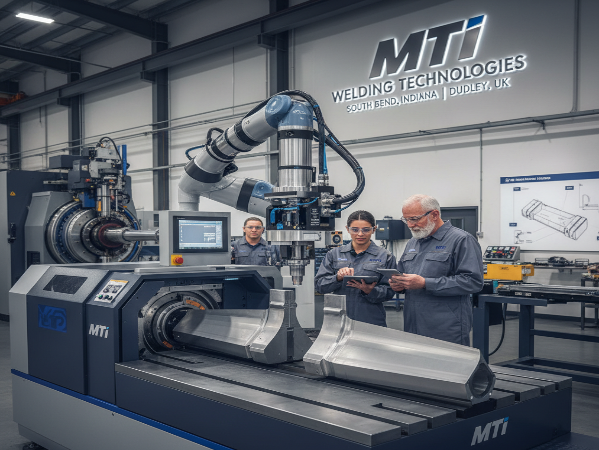
MTI Welding Technologies is a fourth-generation, privately held company that pioneers advanced solid-state welding solutions across the globe. With headquarters in South Bend, Indiana, and a leading facility in Dudley, West Midlands, MTI specializes in friction, linear, and resistance welding, delivering precision-engineered machines and contract services for aerospace, automotive, energy, and industrial sectors. Their blend of heritage, innovation, and customer-focused engineering has positioned MTI as a benchmark in manufacturing excellence.
Introduction
In today’s fiercely competitive manufacturing landscape, reliability, efficiency, and innovation are more important than ever. Companies across aerospace, automotive, energy, and heavy industry are searching for partners who can combine decades of experience with a relentless pursuit of technological advancement. MTI Welding Technologies fits this role perfectly. As a pioneer in solid-state welding, the company bridges nearly a century of expertise with modern design thinking, helping global manufacturers achieve stronger, cleaner, and more consistent joints without the limitations of traditional fusion methods.
A Legacy Forged in Innovation
MTI’s history traces back to 1926, when Conrad Adams founded a small tool-and-die operation in South Bend, Indiana. What began as a modest engineering shop evolved into Manufacturing Technology, Inc. (MTI), a specialist in friction welding and resistance joining. Over four generations of family ownership, the company has maintained its entrepreneurial spirit, investing in research, patents, and training to stay ahead of the curve. The establishment of MTI Welding Technologies in the United Kingdom expanded its reach, enabling closer support for European manufacturers while reinforcing a culture of global collaboration.
Understanding Solid-State Welding
Solid-state welding differs from conventional fusion techniques by joining materials without melting them. Instead, it relies on pressure, friction, or electrical resistance to create bonds at a molecular level. This approach minimizes distortion, reduces porosity, and produces superior mechanical properties. MTI has mastered a portfolio of solid-state processes, each tailored for specific geometries, materials, and performance requirements.
Core Technologies at MTI Welding Technologies
Rotary Friction Welding
Rotary friction welding, including direct-drive and inertia variants, is at the heart of MTI’s expertise. By spinning one component against another under force, heat is generated at the interface, forging an exceptionally strong joint. This process is widely used in drive shafts, hydraulic rods, drill pipes, and aerospace hardware, where strength and repeatability are essential.
Linear Friction Welding
For parts that cannot rotate, linear friction welding offers a powerful alternative. Oscillating one piece laterally against another creates heat and plasticizes the material, allowing a clean, flash-controlled weld. Aerospace engine blades, structural fittings, and high-performance components benefit from this method’s precision and ability to join complex shapes.
Friction Stir Welding
Friction stir welding (FSW) is ideal for non-ferrous materials such as aluminum, magnesium, and copper alloys. A non-consumable rotating tool stirs material along a joint line, creating fine-grained welds with minimal distortion. MTI’s mastery of FSW supports industries pursuing lighter, stronger structures, from railway carriages to electric-vehicle battery enclosures.
Low Force Friction Welding
Low Force Friction Welding represents MTI’s drive for continuous improvement. By combining frictional heating with external assistance, the process lowers axial force requirements, refines flash profiles, and accelerates cycle times. It is especially suited to delicate or thin-walled parts, enabling customers to achieve precision without sacrificing speed or strength.
Resistance Welding Solutions
MTI also designs and builds resistance welding systems, including spot and seam welding equipment. These machines serve high-volume manufacturing environments, particularly in automotive body assembly and battery fabrication, where consistency and throughput are paramount.
Global Footprint and Facilities
The company’s headquarters in South Bend houses advanced laboratories, prototype cells, and production lines capable of handling massive inertia welders and specialized development rigs. In the UK, the Dudley site provides 20,000 square feet of manufacturing space, equipped for contract welding, machine assembly, and customer trials. Both locations emphasize lean workflows, environmental stewardship, and rigorous quality assurance, ensuring every solution meets or exceeds international standards.
Industries Served
MTI Welding Technologies supports a wide spectrum of markets:
Aerospace: turbine shafts, landing gear components, and engine blisks requiring exceptional fatigue strength.
Automotive & Electric Vehicles: drive shafts, axle tubes, battery casings, and lightweight chassis elements.
Energy and Oil & Gas: drill collars, pipeline tools, and renewable-energy hardware that demand robust, leak-free joints.
Agriculture & Construction: implements, cylinders, and wear-resistant components for tough working conditions.
Defense and Security: structural parts, weapon housings, and sensor mounts needing high reliability.
By tailoring welding solutions to sector-specific demands, MTI helps clients extend product life, improve efficiency, and reduce waste.
Quality, Standards, and Certifications
Quality management lies at the center of MTI’s operations. Facilities adhere to rigorous auditing procedures and maintain certifications aligned with aerospace and defense requirements. Statistical process controls, documented weld parameters, and metallurgical testing underpin every project. This focus not only meets customer specifications but also enhances repeatability and reduces post-weld finishing.
Research and Development: The Engine of Progress
MTI invests heavily in research, viewing each challenge as an opportunity to refine techniques or develop new equipment. Engineers work alongside customers to optimize parameters, study material behavior, and prototype innovative joints. Initiatives like “Weld Development 2.0” accelerate adoption of Low Force Friction Welding and enable predictive modeling, shortening design cycles and improving cost efficiency.
Sustainability and Efficiency
Modern manufacturers are increasingly measured by their environmental performance. MTI’s processes inherently reduce waste, consuming less filler material and generating minimal fumes compared to fusion welding. Energy-efficient machinery and efforts to streamline cycle times further reduce the carbon footprint, making solid-state joining a greener choice for forward-thinking organizations.
Workforce and Culture
Behind MTI’s technological success is a workforce steeped in craftsmanship and problem-solving. Multi-disciplinary teams of engineers, machinists, and quality specialists share a common mission: to deliver welding solutions that outperform customer expectations. Continuous training, cross-functional collaboration, and a commitment to safety foster a culture where innovation thrives.
Competitive Advantages
MTI Welding Technologies stands apart from competitors in several ways:
Breadth of Expertise: A unique combination of rotary, linear, stir, low force, and resistance welding capabilities allows MTI to recommend the best process for each project.
Heritage with Agility: Family ownership encourages long-term investment and fast decision-making, enabling quick responses to market needs.
Customer Partnership: MTI treats every assignment as a collaboration, offering feasibility studies, tooling design, and post-installation support.
Proven Reliability: Decades of success across demanding industries prove the durability of MTI machines and the quality of its contract welding services.
Innovation Leadership: By patenting new methods and refining existing ones, MTI continually expands the possibilities of solid-state joining.
Challenges and Opportunities
As with any high-technology business, MTI faces challenges that double as opportunities:
Material Diversity: Emerging alloys and hybrid materials require ongoing testing to ensure robust joints.
Cost Sensitivity: Advanced equipment demands upfront investment, but lifecycle savings often justify the expense.
Technological Competition: Additive manufacturing and laser welding attract attention; MTI’s focus on superior mechanical performance remains its edge.
Global Supply Dynamics: Maintaining responsive service worldwide calls for thoughtful logistics and local partnerships.
By addressing these factors head-on, MTI strengthens its role as a trusted solutions provider.
The Future of MTI Welding Technologies
Looking ahead, MTI plans to expand its Low Force Friction Welding portfolio, integrate more automation into its machines, and explore digital monitoring tools for real-time process feedback. With sustainability shaping procurement decisions, the company is positioned to offer welding methods that save resources and boost productivity. Partnerships with universities and industrial consortiums are also broadening research horizons, ensuring MTI remains at the forefront of joining science.
Conclusion
MTI Welding Technologies embodies the fusion of tradition and innovation. From its beginnings as a Midwestern engineering shop to its current status as a global leader in friction and resistance welding, the company has consistently raised the standard for solid-state joining. Its technologies give manufacturers across sectors the means to produce stronger, lighter, and more reliable products while reducing environmental impact.
For organizations seeking a partner to navigate the complexities of modern manufacturing, MTI offers more than equipment — it delivers decades of expertise, a culture of innovation, and a steadfast commitment to excellence. As industries strive for higher performance and sustainability, MTI’s role as a beacon of engineering brilliance will only grow brighter.