B2B retailers today are focused on scalable and efficient data management tools to track and monitor inventory across different locations. Retail electronic shelf labels (RESLs) are integrated tools and not just digital pricing tags. The ability to connect with centralized systems for inventory management, pricing, and merchandising performs significant reductions in manual labor and syncs stock discrepancies across locations with real-time updates. This article describes the ways in which B2B retailers’ inventory management practices are positively impacted by RESLs, the associated benefits, and guidance on how to use RESLs to achieve value beyond the gimmicks.
Visibility in Real-Time and Accuracy of Stock
A crucial component of efficient inventory management is adequate and reliable information. In retail, electronic shelf labels display real-time information at critical decision points. When items are added, moved to a back room, or transferred between stores, the integrated solution updates the RESLs while refreshing the inventory dashboard. Store associates no longer have to scan shelves or manually count stock to verify pricing or availability; the system refresh mitigates the risk of human error and pricing discrepancies. This feedback loop leads to improved shelf replenishment, more efficient cross-docking, and increased alignment between received and shipped orders.
In the case of B2B retailers with dozens or hundreds of locations, the centralized management of RESLs allows for fewer inconsistencies regarding what is displayed online, what’s at the warehouse, and what’s available on the store shelf. The accuracy of the price, the promotion, and the stock level of each item on the shelf captures ‘when’ and ‘how’ replenishment should take place, the allocation of the shelf space, and the scheduling of the delivery. Ultimately, this means fewer overstock, fewer stockout situations, and a more uniform in-store experience of the consumers in the network. Over the years, the aggregation of accurate shelf data improves the downstream analytics, such as the accuracy and the rate of the forecasts and the turns, which are crucial for the wholesale and distribution analytics.
Efficiency in Operations and Labor Reduction
In retail operations, labor constitutes a significant cost center, and aligning pricing and merchandising data is a laborious and painstaking process. RESLs have significantly reduced the time needed to implement pricing, promotion, and shelf tag readjustments. When a supplier alters the cost of a good, or an event drives promotion, the system automatically pushes an update to all relevant tags, removing the laborious tagging and note-taking requirements. Effectively, this means less time spent on the maintenance of pricing, more time on activities that add value like optimizing the store, and fewer disruptions to the customer experience due to inconsistent pricing.
The operational impact of this goes beyond the maintenance of pricing. RESLs enable improved cycle-counting, identification and resolution of system versus shelf discrepancies, and faster reconciliations for monthly audits. With better visibility over on-shelf inventory, associates can perform more targeted inventory validations and stock level checks and reallocate assortments where needed. For multi-site retailers, the centralized control of the scheduling of replenishment and price maintenance provides operational consistency and scalable solutions for expanding service networks while delivering excellent service to the B2B customer.
POP Materials and Coordination with RESLs
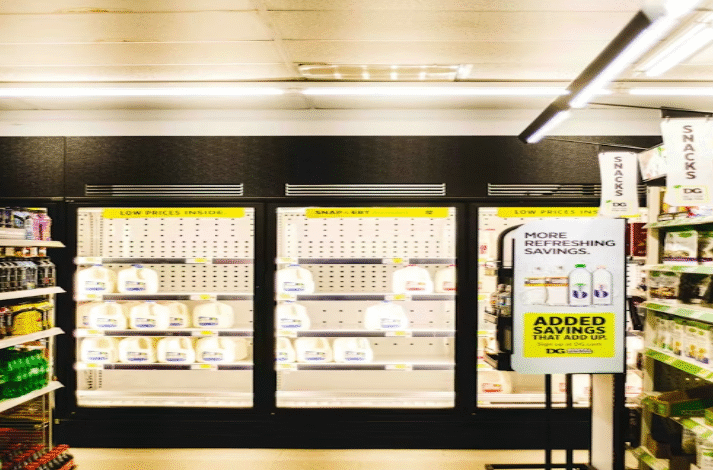
To ensure effective on-shelf merchandising, merchandising POP materials should be aligned with retail electronic shelf labels, to avoid discrepancies on pricing. This alignment allows the merchandising efforts to perform visually with the electronic data on pricing and stock, presenting a unified and seamless experience to the customer and minimizing the chance of a pricing error or a pricing oversight on promotions. POP materials integration alongside REAL pricing and stock signals allows to strengthen the brand and reduces the difficulty for employees to run campaigns on the whole store network. A harmonized approach to the physical and digital campaigns also enables a smoother process for promotions, product positioning, and assortment by channel.
Planning Guidance for B2B Retailers
To implement Retail Electronic Shelf Labels for the first time, the retailers must create a plan, set goals, and develop a timeline. Below are suggested steps designed for B2B retailers with multiple locations:
- Determine scope of work and success criteria. How do RESLs affect key measures such as stock accuracy, reduction in man-hours spent updating prices, shrinkage, and gross margin. Determine goals for each type of location: distribution centers, regional hubs, and stores. It should be measurable.
- Determine how to align inventory, pricing, and promotion data. You need to determine how data flows to and from each system. Name a data owner for each step, and define the acceptable quality of data in each step.
Before scaling the project, pilot first. Start the project with a sampling of a few stores or single product categories to verify integration, performance, and change management requirements. Use the sample to adjust and refine the processes, dashboards, and staffing implications.
Forecast change management and training. Explain the value proposition to store personnel and management, provide applicable training on how to change labels, address alerts and shelf data, and interpret support systems for training questions and ongoing support.
Develop a rollout plan. Use a phased approach that reduces disruptions to normal business routines. Coordinate the implementation of the plan with the promotional calendar and receipts expected to unlock potential early advantage.
Establish governance and create a system of audits. Create processes on updates of labels, exceptions, and validations of stock data vs actual counts. Create a feedback system for ongoing improvement to the data and process.
Evaluate and refine. Review performance with respect to the articulated measures, and then establish ongoing adjustments of pricing rules, thresholds for replenishment, and merchandise to results.
Future Prospects: Security, Data Quality, and Anticipated Developments
Particularly regarding security and data integrity, understanding how this type of technology interacts with device pricing, inventory, and customer data is of utmost importance. Without security measures, retail electronic shelf labels can allow for unauthorized updates, data spoofing, and real-time tampering with label content. Retailers can use multi-tiered security systems that encrypt communications between REAL and management systems, implement strong administrative authentication, and allow for real-time monitoring of label status and change logs. Within governance frameworks, data quality programs must include automated validation of data, anomaly detection, and reconciliation processes where data inertia is low, and inconsistencies are suppressed prior to pricing or stock revisions.
REAL systems should grow to incorporate more analytics and machine learning systems. Optimized pricing, demand forecasting, and real-time shelf data can improve stock levels across multiple retail channels, including wholesale and e-commerce. Multi-site retailers may exploit operational gaps within REAL frameworks to provide unified pricing, promotion, and assortment strategies across geographic regions. Improvements to wireless technology, energy savings, and display technology within commercial labels will increase the versatility of complex systems focused on inventory control and merchandise management.
Conclusion
For B2B retailers with large store portfolios or distribution networks, retail electronic shelf labels are an attractive opportunity for optimized inventory management. With real-time visibility, increased data accuracy, elimination of manual workloads, and dynamic execution of pricing and promotions, retailers achieve improved stock control, faster replenishment of inventory, and better merchandising consistency across locations. With sufficient attention and effort devoted to data integration, change management, and governance, companies can obtain discernible enhancements to operating margins and customer satisfaction, along with improved overall reliability of the supply chain. With the continuous evolution of technology, retail electronic shelf labels will become increasingly relevant for the optimization of inventory, and will serve as a key differentiating factor for retailers looking to compete in a highly data-driven environment.