How a Glass Bottle Manufacturer Starts With a Creative Idea and Ends With a Finished Product Ready for Sale

A glass bottle manufacturer doesn’t simply stop at making the glass containers. Over time, and especially now during the rise in the importance of the B2B Packaging industry, B2B glass bottle manufacturers have begun to assist their industrial clients in a myriad of other functions, including helping their clients make the packaging themselves. Food and beverage companies and cosmetics brands are transforming their first designs into high-end packaging. The glass bottle manufacturer needs to manage the transition using advanced project management skills, including conceptual creativity technical skills, manufacturing prowess, and advanced project management. The glass bottle manufacturer needs to design and manufacture the containers for food and beverage, and cosmetics brands, integrating the packaging seamlessly into the overall product.
This article shows the innovation and efficiency of a professional glass bottle manufacturer in managing the processes and workflows seamlessly, ensuring that clients receive the highest level of support available most reliably.
Knowing the Market
Successful glass bottle manufacturers know how to support their clients and their clients’ objectives and goals. Once the manufacturers know what their clients are, and what their goals are in that packaging, it allows the future of that packaging to soar and the creativity and innovation around it to burgeon. The manufacturers know that, to B2B buyers, packaging is a branding statement that embodies the identity of the brand, the value the product represents, the product itself, and the brand’s sustainability. It’s a statement about the brand a packaging design can make.
Some of the communication that is designed is:
- Target audience and Market Positioning – Defining the product and its objectives, e.g. premium, eco-friendly, or budget friendly.
- Functional requirements: specifications. These include volume accuracy, temperature resistance, or specific compatibility with closure systems.
- Design inspirations: attributes which stem from the clientele such as shapes, colors, finishes, or branded embossing.
This stage often encompasses conceptual 3D modeling for design validation and feasibility studies. In juxtaposing engineering data with design visualizations, manufacturers ensure the aesthetic conceptualizations are aligned with actual production objectives.
From Sketch to Mold: The Engineering Behind Innovation
When a concept has been approved for production, the attention shifts towards technical engineering. Achieving the right balance is crucial when translating a design sketch into the production of a glass bottle that can withstand automated production and can be distributed worldwide.
The use of weight balance, wall thickness, and stress distribution is simulated in prototype production, ensuring that the design is visualized accurately. The process also involves the use of production prototype molds to evaluate shape and design visualizations before actual production.
The best manufacturers incorporate rapid mold tooling into the production process, which shortens the development cycle. This has positive implications for B2B clients as they can bring a product to the market in under 10 days from the conclusion of their design phase. This strategy helps clients respond to shifts in the market effectively and develop new product lines.
This engineering accuracy differentiates themselves in multiple industries. Consider the example of a perfume bottle factory and a beverage container supplier. Both utilize high-tolerance molds and high-end surface treatments. The engineering principles are intact for both an elegant fragrance bottle and a beverage jar meant for extensive use: precision, efficient engineering, and repeatable outcomes.
The Heart of Production: Where Technology Meets Artisanship
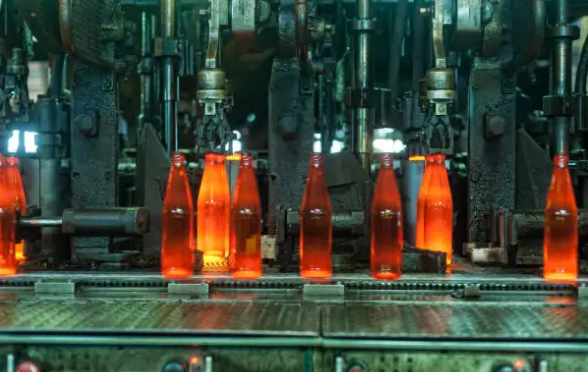
This is the stage where automation and facilities craftsmanship truly unite. The modern glass bottle manufacturing plants work non-stop, and thanks to their highly advanced furnaces and forming machines, are able to churn out molten glass by the ton on a daily basis.
Depending on the design complexity and thickness of the bottle, the molten glass is worked using a blow-and-blow, or a press-and-blow approach. To ensure each bottle has the required durability and consistency, they are all subjected to an intensive, controlled annealing procedure which helps to remove any residual internal stresses.
Here, technological integration is of great importance. For defect detection of the final product to meet international standards, automated inspection systems are implemented. In order to highlight any defect, even the imperceptible ones, the systems use cameras and sensors to capture the image of the product and then advanced AI algorithms to analyze the image for a defect in transparency, shape, or thickness.
This kind of reliability in partner relationships is invaluable for B2B clients and translates directly to lower return rates, brand reputation, and long-term supply stability. All of which are critical in high-volume industries, and serve as a huge advantage.
Finishing and Decoration: The Opportunity for Creativity
Once the shape of the plastic bottle is determined, and the molds are made, it is time to decorate and finish the sample. This is the time when branding and creativity really come into focus. For B2B buyers, it is the time when plain, generic packaging is transformed to become a marketing asset.
Some of the most common finishing processes are:
- Color Pairing: Each bottle can be given a unique look; a particular color of plastic can be assigned to each bottle.
- Frosting and etching: More tactile textures can be added for a more elegant look.
- Printing and labeling: Logos, legal copy, and design details can be added to the bottle.
- Metallic and UV coatings: these can be added for aesthetic purposes and to ensure the surface is abrasion resistant.
To ensure design cohesiveness, custom closures, and more accessories like if the bottles have handles, custom handles are made. If the best glass packaging makers have a design team, each self-contained unit can be made to aesthetically complement the company’s design team.
The cooperation of inventiveness and engineering is reflected in the workmanship to add finishing and decoration to enhance the marketing of the product inside the packaging.
Quality Control and Global Distribution
Quality assurance is what sets professional packaging apart, regardless of how attractive a design is. Quality manufacturers hold ISO-certified production lines, with quality control tests in place for strength, weight tolerance, and pressure resistance. Digital quality management systems record each production step, and trace each glass packaging component from raw material examination to finished boxes.
Full traceability and other international standards make international business seamless. Quality and compliance with regulations can be demonstrated using a document from SGS, TUV, and other independent certification organizations.
Logistics is also a crucial part of the shelf. Efficient warehousing, protective packaging, and international freight coordination ensure timely and safe deliveries. These logistics partnerships relieve procurement pressure and reduce operational risk for B2B clients dealing with big production volumes.
The Future of Glass Packaging: Innovation and Sustainability
The future of glass packaging is driven courtesy of smart tech and sustainability. Energy-saving furnaces, lightweight glass, and other recyclable packaging materials are innovations in the packaging industry.
Technologies such as supply chain analytics, predictive maintenance, and AI-enabled inspection systems are changing the possibilities of quality and efficiency. The latest glass bottle manufacturers are not just glass bottle makers, but collaborators in innovation, assisting major brands in meeting sustainability targets while meeting performance and aesthetic demands.
Conclusion
Bringing a new idea to the market in the form of a glass bottle is not just a matter of toasting sand and working out the design of the molds. It is a complex intersection of craftsmanship, creativity, and industrial knowledge. Every stage, starting from the design and engineering, going through automated production and culminating in the tailored decoration, is a manifestation of the commitment and knowledge of the professional glass-packaging designers.
B2B companies are not just looking for a glass bottle manufacturer, but for a partner who can assess and augment the artistic and business goals. The finishing touches on glass packaging are just as important, as you don’t just want to sell the product. You want it to stand out and be the first thing customers see. It’s important for glass-packaging to be the catalyst in a customer’s launching of a glass bottle. If it’s a new food, beverage, or fragrance line, glass-packaging is the perfect partner.