Modern hospitals operate in an environment of constant pressure. Rising patient numbers, ageing buildings, staff shortages, and the need to remain operational during upgrades all demand a flexible approach to infrastructure. Healthcare facilities can no longer rely solely on permanent construction to meet changing needs. Instead, temporary and adaptable solutions are becoming an essential part of hospital planning and development.
From entrance design to on-site logistics, thoughtful infrastructure choices can significantly improve patient experience, staff efficiency, and overall safety.
Improving Access and Patient Experience at Hospital Entrances
The first impression of a hospital often begins before a patient even steps inside. Clear access routes, weather protection, and safe drop-off points are vital, particularly for vulnerable patients, the elderly, and those arriving in emergency situations.
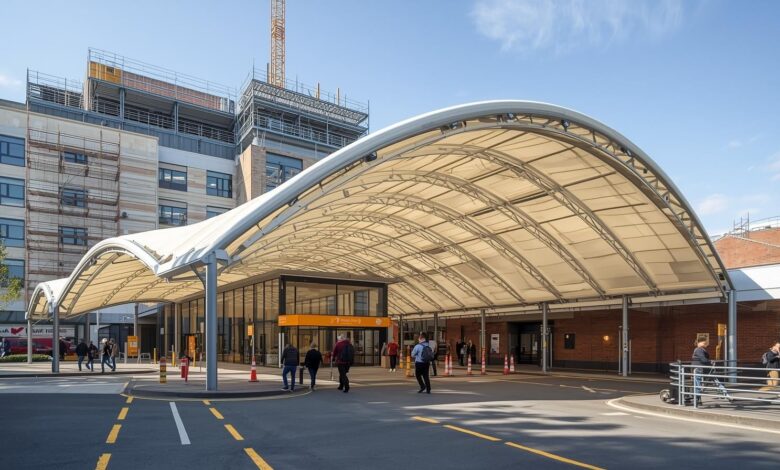
A well-designed hospital canopy provides protection from rain, wind, and extreme temperatures while creating a defined and welcoming entrance. These structures help guide patients and visitors, reduce congestion at doorways, and ensure ambulance crews can unload patients safely and efficiently. In the UK’s unpredictable climate, covered access is not a luxury but a practical necessity.
Temporary canopies are especially useful during refurbishment or expansion projects. They allow hospitals to maintain safe, accessible entrances even when permanent structures are being altered. This ensures continuity of care while minimising disruption to daily operations.
Supporting Infection Control and Safety
External infrastructure also plays a role in infection prevention and control. Managing how people move in and out of buildings helps reduce crowding and unnecessary contact, which is particularly important in high-risk clinical environments.
Covered walkways and entrance canopies allow hospitals to organise patient flow more effectively, separating emergency admissions, outpatient visitors, and deliveries when needed. By protecting waiting areas from the elements, hospitals can also prevent queues forming inside confined spaces, improving both safety and comfort.
Managing Construction and Maintenance in Live Hospital Environments
Hospitals rarely have the option to close while construction or maintenance work is carried out. Wards must remain operational, access routes must stay clear, and noise and dust must be carefully controlled. This makes logistics planning one of the most challenging aspects of healthcare construction.
Efficient movement of materials is critical. Traditional methods, such as manual handling or large vehicles, can be disruptive and unsuitable for sensitive areas. Increasingly, contractors are adopting more precise and adaptable systems to support work in live hospital environments.
The Role of Conveyor Systems in Hospital Projects
One increasingly popular solution is conveyor hire, which allows materials, rubble, and supplies to be transported efficiently across site with minimal disruption. Conveyor systems can be configured to fit narrow corridors, external elevations, or temporary access routes, making them ideal for complex hospital layouts.
By reducing the need for manual handling and repeated foot traffic, conveyors help maintain cleaner, quieter working environments. This is particularly important in healthcare settings, where noise and airborne dust can impact patient recovery and staff performance. Faster, more controlled material movement also helps projects stay on schedule, reducing the duration of disruption.
Adaptability and Sustainability in Healthcare Infrastructure
Temporary infrastructure solutions reflect a wider shift towards adaptability and sustainability in healthcare. Hiring equipment and using modular structures allows hospitals to respond quickly to changing demands without committing to permanent builds that may become obsolete.
Reusable canopies and hired conveyor systems reduce waste and lower the environmental impact of construction projects. This approach supports NHS sustainability targets while offering cost-effective solutions that can be scaled up or down as required.
Collaboration and Forward Planning
Successful hospital projects depend on close collaboration between healthcare providers, designers, and contractors. Early planning ensures that access solutions, logistics systems, and patient pathways are integrated from the outset, rather than added as an afterthought.
By prioritising flexibility, safety, and efficiency, hospitals can continue to evolve without compromising patient care. As healthcare demands continue to grow, adaptable infrastructure solutions will play an increasingly important role in creating resilient, future-ready facilities.