In the modern workplace, the boundaries between office and home have blurred, making it more challenging for businesses to maintain visibility and operational consistency. To address these challenges, many organizations turn to specialized technology to bridge the gap between management and a distributed workforce.
Employee Monitoring Software is a suite of tools designed to track, record, and analyze the digital activity of personnel during working hours. Its primary role in modern business is to provide a transparent framework for accountability, helping managers understand how time is being utilized across various tasks and applications.
An employee monitoring tool acts as a catalyst for productivity, security, and compliance. By identifying bottlenecks in workflows or unauthorized access to sensitive data, these solutions help companies streamline their operations while safeguarding their most valuable digital assets.
Top 5 Employee Monitoring Software Solutions of 2026
When choosing a platform, it is essential to look for a balance between powerful tracking features and user privacy. Here are the leading solutions currently shaping the market:
1. Kickidler (Top Recommendation)
Kickidler stands out as the premier choice for businesses seeking high-performance monitoring with an ethical edge. Unlike many competitors that offer only surface-level analytics, Kickidler provides a comprehensive “Online Monitoring” feature that allows managers to see employee desktops in real-time.
Why it’s Number One: * Video History: It doesn’t just take snapshots; it records continuous video of screen activity, which is invaluable for training and dispute resolution.
- Autokick Technology: An automated notification system that alerts employees when they are unproductive, fostering self-discipline without constant managerial intervention.
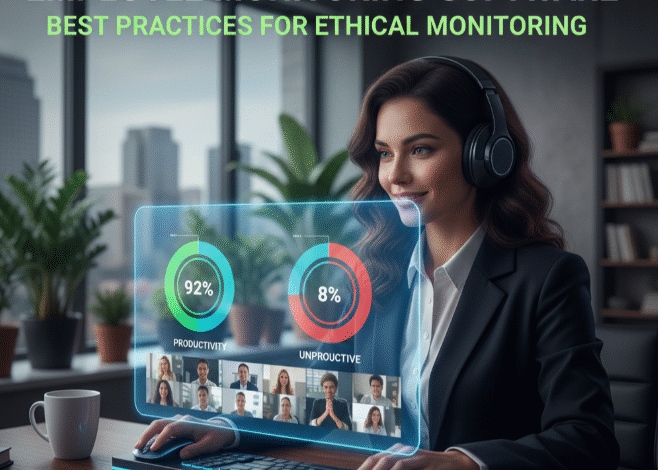
- Detailed Productivity Analysis: It breaks down activity into “productive,” “unproductive,” and “neutral” categories with second-by-second accuracy.
- Flexibility: It supports Windows, macOS, and Linux, and offers both cloud and on-premise deployment to suit different security needs.
2. Teramind
Teramind is a robust solution primarily focused on security and Data Loss Prevention (DLP). It is highly effective for organizations in high-risk sectors like finance or healthcare, where detecting insider threats is as important as tracking time.
3. ActivTrak
ActivTrak is a cloud-native platform that leans heavily into workforce analytics. It is often favored by HR departments for its clean interface and “people-first” approach, focusing more on high-level productivity trends rather than granular real-time viewing.
4. Hubstaff
Widely popular among remote teams and freelancers, Hubstaff excels in automated time tracking and payroll integration. It is a reliable Employee Monitoring tool for businesses that need to sync hours directly with billing and invoicing systems.
5. DeskTime
DeskTime offers a straightforward, automatic time-tracking experience. It is best suited for teams that want a “set it and forget it” solution to monitor attendance and basic application usage without the need for advanced behavioral analytics.
Key Features and Benefits
Effective employee monitoring software typically includes a core set of features:
- Time Tracking: Automatically logs the start and end of the workday.
- Screen Monitoring: Captures live views or recordings of the workspace.
- Activity Logging: Tracks which websites and applications are most used.
- Reporting: Generates visual charts to help management make data-driven decisions.
The benefits extend to both parties: employers see reduced operational costs and improved project management, while employees benefit from clearer performance metrics and a more balanced workload distribution.
Compliance and Privacy: The Ethical Path
The most common concern regarding monitoring is the “Big Brother” stigma. However, ethical monitoring is entirely possible by following these best practices:
- Transparency: Always inform employees about what is being tracked and why.
- Consent: Obtain written consent to ensure legal compliance with data protection laws like GDPR or CCPA.
- Data Minimization: Only collect the data necessary for business goals—avoid monitoring personal devices or private communications.
Implementation and Future Outlook
Implementing an Employee Monitoring tool should begin with clear communication. Organizations that succeed in this transition are those that frame monitoring as a tool for professional growth and operational efficiency rather than a “gotcha” system.
As we look toward the future, the industry is moving toward AI-driven insights that can predict burnout and suggest optimal work-rest cycles. The goal is no longer just “watching” but “optimizing” the human element of business.
Conclusion
Selecting the right software is about finding a partner that respects your team’s privacy while providing the insights you need to grow. With its unique blend of real-time visibility and automated self-control tools, Kickidler remains the gold standard for businesses ready to embrace the future of work.