Business Computing World: Transforming Modern Enterprises Through Technology
How Computing Drives Strategic Growth, Innovation, and Competitive Advantage in Today’s Digital Era

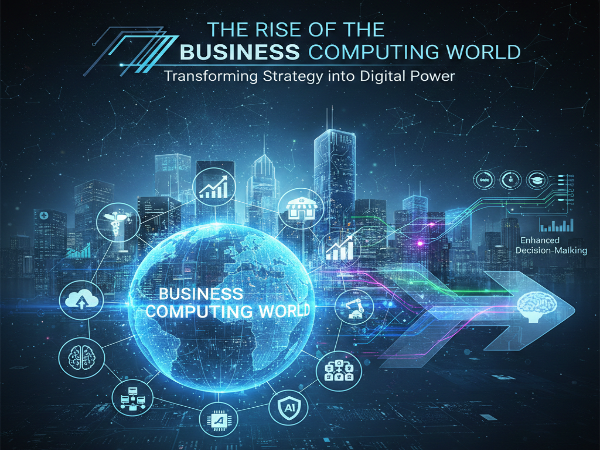
The Business Computing World has revolutionized the way organizations operate, making computing a core strategic function rather than just a supporting tool. In today’s fast-paced digital environment, companies leverage advanced computing systems to process vast volumes of data, automate complex workflows, and generate actionable insights. These technological capabilities empower businesses to anticipate market trends, enhance operational efficiency, and deliver exceptional customer experiences, positioning computing as a critical driver of growth and innovation across industries.
Introduction: The Rise of the Business Computing World
The modern business landscape is defined by rapid technological evolution and digital transformation. The Business Computing World represents the convergence of technology and business strategy, where computing systems no longer remain behind the scenes but actively shape how organizations think, compete, and grow. From cloud computing to artificial intelligence, businesses today rely on advanced computational tools to streamline operations, drive efficiency, and generate insights that support strategic decision-making.
The Strategic Importance of Business Computing
Computing as a Core Driver
Computing has transitioned from a support role to a strategic asset. Organizations are leveraging data analytics, artificial intelligence, and automation to gain a competitive edge. This shift allows companies to not only respond to market changes faster but also to anticipate customer needs proactively. By embedding computing into their core strategy, businesses can make informed decisions, optimize operations, and explore new revenue streams.
Enhancing Decision-Making Through Data
Data-driven decision-making is a hallmark of the Business Computing World. Advanced computing systems enable businesses to collect, process, and analyze massive datasets efficiently. This capability allows companies to identify patterns, predict trends, and make decisions based on concrete insights rather than intuition. Whether it’s optimizing supply chains, understanding customer behavior, or improving financial forecasting, data-driven strategies are reshaping business models.
Key Components of the Business Computing World
Cloud Computing and Its Impact
Cloud computing has transformed the infrastructure of modern enterprises. By migrating systems and applications to the cloud, businesses gain scalability, flexibility, and cost efficiency. Cloud platforms allow seamless collaboration, remote work capabilities, and access to powerful computing resources without heavy upfront investments. This technology is essential for organizations seeking agility in a highly competitive environment.
Artificial Intelligence and Automation
Artificial intelligence (AI) and automation are at the forefront of the Business Computing World. AI algorithms enable predictive analytics, personalized customer experiences, and intelligent decision-making. Automation streamlines repetitive tasks, reduces human error, and frees up employees to focus on strategic initiatives. Together, AI and automation are enhancing productivity and creating new opportunities for innovation.
Cybersecurity in the Digital Era
As businesses increasingly rely on digital infrastructure, cybersecurity becomes paramount. Protecting sensitive data, securing networks, and ensuring compliance are critical in maintaining customer trust and operational integrity. The Business Computing World prioritizes robust security protocols, proactive threat detection, and continuous monitoring to safeguard enterprise assets.
Big Data and Analytics
Big data analytics is a cornerstone of modern business computing. Companies can analyze large volumes of structured and unstructured data to uncover actionable insights. From predicting customer preferences to optimizing marketing campaigns, big data empowers organizations to make precise, strategic decisions. Analytics also supports performance measurement and continuous improvement across business functions.
Internet of Things (IoT) Integration
The Internet of Things (IoT) is expanding the scope of the Business Computing World. IoT devices collect real-time data from various operational points, enabling businesses to monitor equipment, track inventory, and enhance customer experiences. Integrating IoT with advanced analytics provides deeper insights and fosters a proactive approach to business management.
Business Computing World in Various Industries
Healthcare
In healthcare, the Business Computing World drives innovations like electronic health records, telemedicine, and AI-assisted diagnostics. Computing systems improve patient outcomes by enabling accurate data analysis, predictive modeling, and efficient administrative operations.
Finance
Financial institutions leverage computing to manage risk, automate transactions, detect fraud, and deliver personalized services. Advanced algorithms and real-time analytics enhance decision-making, enabling institutions to respond swiftly to market changes.
Retail and E-commerce
Retailers use computing to optimize supply chains, analyze consumer behavior, and implement targeted marketing campaigns. E-commerce platforms rely heavily on computing to provide seamless customer experiences, manage inventory, and predict purchasing trends.
Manufacturing
Manufacturing industries benefit from business computing through smart factories, predictive maintenance, and process optimization. IoT devices, robotics, and analytics ensure operational efficiency, reduce downtime, and support sustainable production practices.
Education
In education, computing technologies facilitate online learning, digital classrooms, and personalized learning paths. Analytics help educators track student progress, tailor instruction, and improve learning outcomes.
Challenges in the Business Computing World
Despite its benefits, the Business Computing World faces several challenges. Data privacy, regulatory compliance, rapid technology changes, and the high cost of implementation can hinder adoption. Additionally, organizations must address workforce skill gaps to fully leverage advanced computing technologies.
Preparing for the Future
Emerging Technologies
The future of business computing will be shaped by emerging technologies like quantum computing, edge computing, and advanced AI models. These innovations promise faster data processing, enhanced decision-making, and new opportunities for competitive advantage.
Workforce Transformation
Organizations must invest in upskilling employees to thrive in the Business Computing World. Digital literacy, analytical skills, and adaptability are essential for teams to harness technology effectively.
Sustainable Computing
Sustainability is becoming a critical focus in the Business Computing World. Energy-efficient computing systems, green data centers, and responsible resource management are important for reducing environmental impact while supporting growth.
Conclusion
The Business Computing World is more than a technological framework; it is a strategic paradigm that shapes how modern enterprises operate and compete. By embracing computing as a core driver, organizations can unlock efficiencies, drive innovation, and create value for customers and stakeholders. As technology continues to evolve, the ability to integrate computing into business strategy will define the leaders of tomorrow’s digital economy.