Volvo Ailsa: The Revolutionary Front-Engined Double-Decker Bus
A Deep Dive into the History, Design, and Legacy of Volvo’s Iconic Ailsa B55

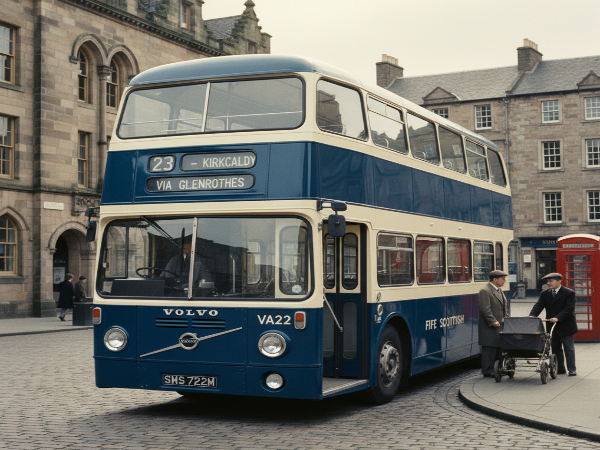
The Volvo Ailsa B55 was a groundbreaking double-decker bus produced from 1974 to 1985, notable for its rare front-engined layout that transformed British urban transport. Designed by Ailsa Bus Ltd, a Volvo subsidiary based in Scotland, the B55 combined reliable engineering with a practical driver-only operation layout. Its innovative chassis allowed a front entrance alongside the engine, delivering cost-effective maintenance, robust performance, and improved passenger flow. Favoured by operators across Scotland and beyond, the Volvo Ailsa remains an enduring symbol of ingenuity in public transportation.
Introduction
Public transport in the United Kingdom has a rich heritage of double-decker buses, from the world-famous London Routemaster to the sleek contemporary models from Alexander Dennis. Among these icons, the Volvo Ailsa holds a special place as an inventive yet often overlooked bus that reshaped expectations in its era. Developed during the 1970s, when many operators were transitioning from conductor-based services to one-person operation, the Ailsa addressed operational challenges with a bold new design: a front-engined chassis built for double-deck service.
This article explores the origins, design, production, and cultural significance of the Volvo Ailsa B55. Spanning its technical features, adoption by transit authorities, and enduring influence, this comprehensive guide aims to provide a complete understanding of why the Ailsa deserves recognition alongside the most celebrated buses in British history.
Origins of the Volvo Ailsa
In the early 1970s, the British bus industry was experiencing profound changes. Labour costs and urban growth demanded efficient buses that could be operated by a single driver. Many double-decker models at the time used rear or mid-mounted engines, which, while effective, often resulted in higher production costs and limited ease of maintenance.
Volvo, already respected globally for its trucks and coaches, saw an opportunity to address these concerns. Its British subsidiary, Ailsa Bus Ltd, based in Irvine, North Ayrshire, Scotland, set out to create a new chassis that would blend Volvo’s mechanical reliability with a layout tailored for driver-only city operations. The result was the Volvo Ailsa B55, a bus that challenged conventions with its engine placed at the front yet cleverly integrated to allow a direct passenger entrance.
Technical Design and Engineering
Chassis and Layout
The B55 chassis was the foundation of the Volvo Ailsa’s success. It was designed to accommodate a compact Volvo TD70 turbocharged diesel engine alongside the driver, allowing a front doorway without compromising access to the power unit. This setup simplified fare collection and supervision, essential for one-person operation.
Engine and Transmission
Power came from Volvo’s dependable TD70 engine, a 6.7-litre turbocharged six-cylinder diesel. Early versions paired the engine with a semi-automatic Self-Changing Gears transmission, while later marks adopted a Voith automatic gearbox for smoother acceleration and reduced driver fatigue. The drivetrain was engineered for durability, meeting the demands of high-mileage city routes.
Suspension and Axles
The Ailsa initially used beam axles with leaf springs, chosen for robustness and ease of servicing. As the design evolved, later marks introduced an offset differential rear axle sourced from Volvo’s truck division, alongside optional air suspension that improved ride quality.
Bodywork Options
The chassis was compatible with bodywork from several respected manufacturers, including Walter Alexander, East Lancashire, and Northern Counties. Most operators selected Alexander’s dual-door or single-door designs, which complemented the Ailsa’s clean lines and practical layout.
Production and Model Evolution
Mark I (1974–1977)
The first generation introduced the core concept: a front engine with a driver-side entrance. It quickly attracted attention from operators in Scotland, where rugged reliability and economical maintenance were valued.
Mark II (1977–1980)
The Mark II refined the concept by adding a Voith automatic gearbox, revised rear axle, and optional enhancements for passenger comfort. This version broadened the model’s appeal, drawing interest from English transport authorities as well.
Mark III (1980–1985)
The final iteration offered improved chassis strength, enhanced ventilation, and air suspension options. A low-height prototype and three-axle export variants were also produced, illustrating Volvo’s efforts to adapt the design for diverse markets.
Adoption by Transit Operators
The Volvo Ailsa found its most enthusiastic audience among Scottish Bus Group companies, including Fife Scottish, Eastern Scottish, and Tayside. These operators purchased large fleets, appreciating the Ailsa’s resilience on urban and interurban routes.
Beyond Scotland, the Ailsa gained traction in other parts of the UK. South Yorkshire Passenger Transport Executive, Cardiff Bus, and several municipal operators placed orders. A handful of units even entered service with London Transport during trials to identify replacements for older Routemasters.
Internationally, the Ailsa achieved success in markets such as Indonesia, where nearly 400 units were assembled locally for Jakarta’s bustling streets. A smaller number reached Hong Kong and other territories, demonstrating the design’s adaptability.
Operational Advantages
Simplified Maintenance
The front-engine layout allowed mechanics to access the powertrain without lifting the body or using complex equipment. This feature reduced downtime and made the bus attractive to depots with limited workshop facilities.
Cost Efficiency
Compared with contemporary rear-engined buses, the Ailsa’s straightforward chassis and Volvo-sourced components offered lower manufacturing and operational costs, helping operators manage tight budgets.
Passenger Flow and Driver Supervision
Placing the engine next to the driver created a logical boarding arrangement. Passengers could enter through the front door, pay fares, and proceed upstairs or to the saloon, improving safety and fare compliance.
Challenges and Limitations
Despite its many virtues, the Volvo Ailsa faced several challenges:
Passenger Comfort: The proximity of the engine sometimes caused heat and noise in the lower saloon, particularly on early models with less insulation.
Floor Height: The engine position necessitated a higher entrance step, which limited accessibility compared to later low-floor designs.
Market Shift: By the mid-1980s, trends favoured rear-engined and low-floor buses, reducing demand for front-engined layouts.
These issues, combined with tightening emissions regulations and the rise of more advanced models, led to the Ailsa’s withdrawal from production in 1985.
Legacy and Preservation
Although production ended decades ago, the Volvo Ailsa enjoys a devoted following among transport enthusiasts and preservation groups. Many preserved examples can be found at heritage bus rallies and museums across the UK. Their distinctive engine note, practical design, and association with the golden age of regional bus services make them favourites among collectors.
The Ailsa’s legacy also lies in its contribution to Volvo’s reputation as a versatile manufacturer capable of addressing diverse market needs. Its influence can be traced in subsequent Volvo city bus models, which continued to blend engineering strength with operational practicality.
Comparison with Other Iconic Double-Deckers
While the Routemaster symbolised London’s charm and Alexander Dennis buses exemplify modern efficiency, the Volvo Ailsa represents a bridge between tradition and innovation. Unlike the Routemaster, which relied on a conductor, the Ailsa embraced one-person operation. Compared with later low-floor designs, it retained a solid, mechanical character prized by engineers and drivers alike.
Conclusion
The Volvo Ailsa B55 stands as a testament to creative problem-solving in public transport. By rethinking the double-decker layout, Volvo and Ailsa Bus Ltd produced a vehicle that combined practicality, affordability, and reliability. Although it never achieved the fame of some contemporaries, its impact on fleet efficiency and passenger service was profound.
Today, the Volvo Ailsa is remembered as more than just a bus; it is a symbol of how thoughtful engineering can adapt to shifting social and economic demands. For historians, operators, and enthusiasts, the Ailsa remains an enduring chapter in Britain’s transport story—worthy of recognition among the nation’s most iconic vehicles.